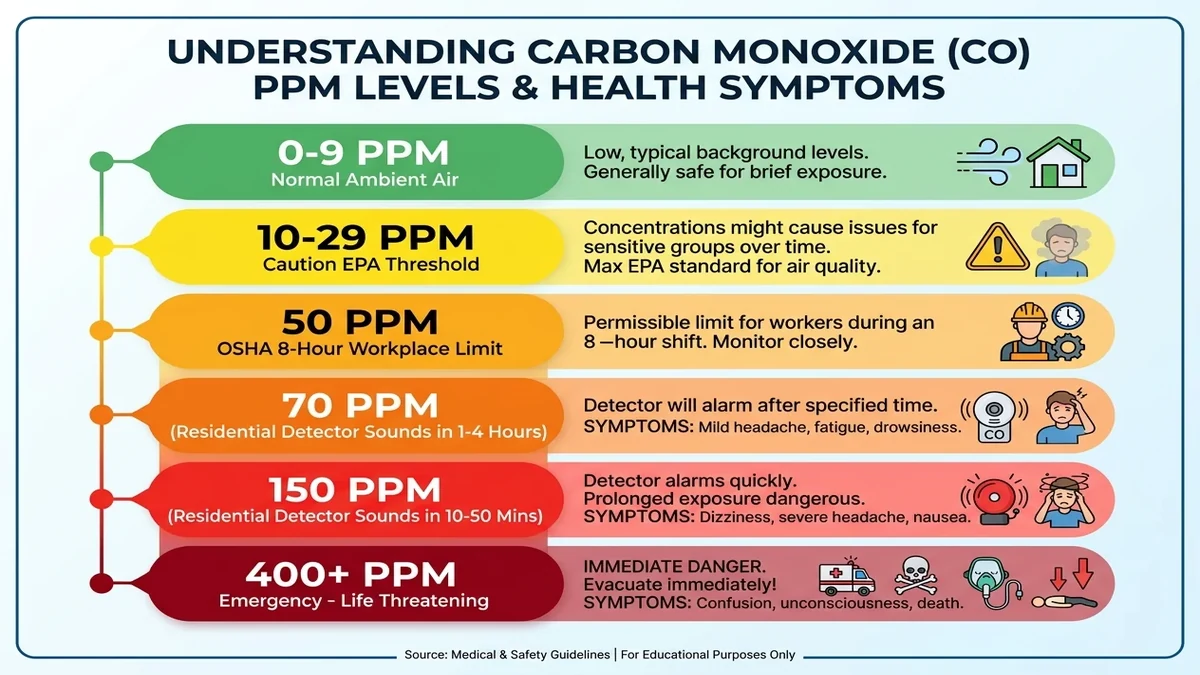
Carbon monoxide binds to hemoglobin in red blood cells with an affinity over 200 times greater than oxygen, forming carboxyhemoglobin (COHb) and depriving the brain, heart, and body tissues of oxygen.
UL 2034 / EN 50291 Alarm Response Time Windows
Residential carbon monoxide alarms do not sound instantly at low PPM levels to prevent nuisance false triggers from transient background sources (such as brief stove startup or street traffic). Instead, microprocessors track cumulative exposure over time:
| CO Concentration (PPM) | UL 2034 Mandatory Alarm Response Window | Physiological Symptoms (Healthy Adult) |
|---|---|---|
| 30 PPM | Must NOT sound within 30 days | No symptoms in healthy adults; normal transient indoor variation |
| 70 PPM | Must sound within 60 to 240 minutes (1 to 4 hours) | Mild frontal headache, fatigue, slight shortness of breath after 2-3 hours |
| 150 PPM | Must sound within 10 to 50 minutes | Throbbing headache, dizziness, nausea, impaired judgment within 1 hour |
| 400 PPM | Must sound within 4 to 15 minutes | Severe headache, confusion, loss of consciousness; life-threatening within 2 hours |
| 800+ PPM | Instant alarm trigger | Unconsciousness within 30 minutes; fatal within 1 hour |
High-Risk Vulnerability Factors
While standard alarm thresholds protect healthy adults from reaching dangerous carboxyhemoglobin levels (>10% COHb), vulnerable populations (infants, pregnant women, elderly individuals, and people with cardiovascular or respiratory conditions) experience adverse effects at lower concentrations. Digital display CO alarms provide early visual visibility of low PPM concentrations before emergency audible sirens trigger.