Independent Fire Safety & Alarm Maintenance Guide | Primary standards & manufacturer manuals
Fire Safety & Alarm Maintenance Documentation

How to Test a Smoke Detector

Direct Answer: How to Test Smoke Detectors

Test a smoke detector by pressing and holding its Test button according to the manufacturer instructions until the siren sounds. A functional smoke detector emits a loud, continuous Temporal-3 horn pattern. For interconnected alarm networks, verify that all connected units sound across the home. Use certified aerosol spray for functional chamber tests, and keep open flames away from all sensors.

How to Use This Diagnostic Tool

Follow 4 quick steps to identify alarm beeps, flashing codes, and safe resolution procedures.

1
Check Safety First

Confirm there is no active smoke, fire, or carbon monoxide emergency before troubleshooting.

2
Note the Sound Pattern

Listen for single periodic chirps, full emergency sirens, or observe flashing LED light colors.

3
Identify Your Model

Select your brand and model number from the back label to unlock exact manufacturer manuals.

4
Apply the Safe Fix

Follow verified resolution steps to silence nuisance chirps, clean dust, or replace expired units.
Quick Diagnostic: What is your alarm doing?

Single Intermittent Chirp
Low battery, dust, or end-of-life
Chirps After Battery Swap
Residual power capacitor drain
Random False Alarms
Steam, insects, humidity, cooking
Blinking Green Light
Normal AC power or memory cycle
Flashing Red Light
Hush mode, alarm latch, or low cell
CO Alarm Beeping
4 beeps emergency vs. 1 chirp fault
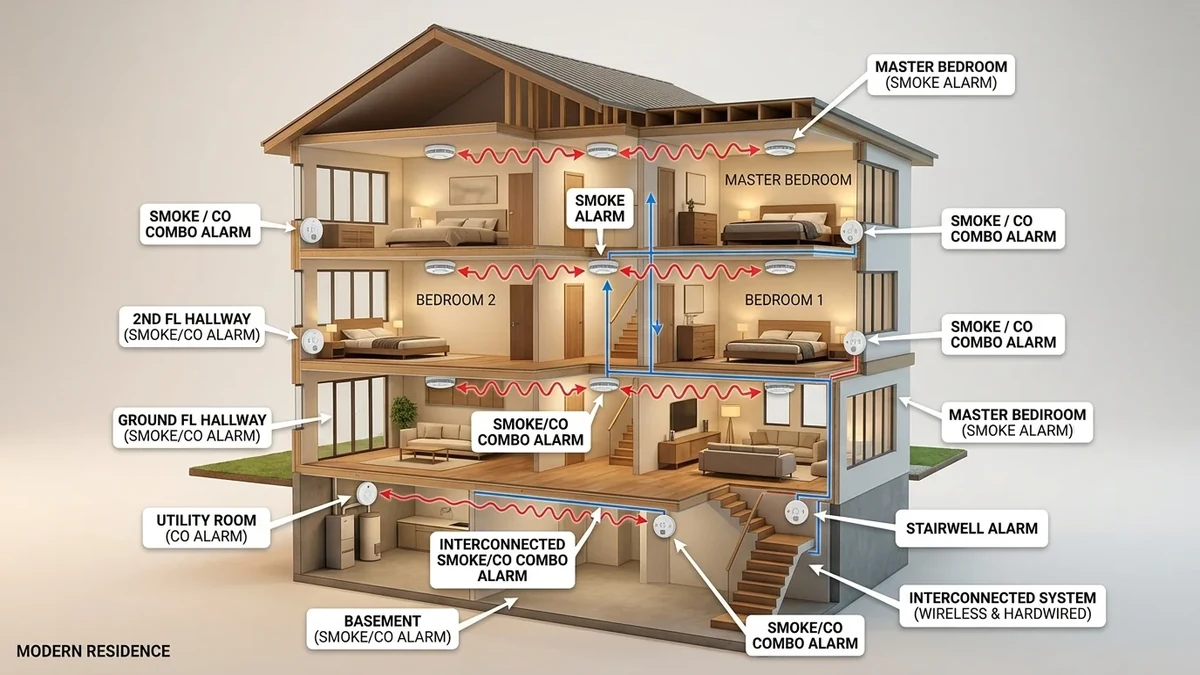
Residential smoke alarm and fire safety installation layout diagram
Residential fire protection layout: interconnected alarms, strategic placement zones, and early warning life safety.

Explore Knowledge Hubs

Systematic guides organized by operational need, hardware type, and regulatory compliance.

Our Editorial & Research Methodology

Smoke Alarm Guide synthesizes published fire safety codes, engineering test procedures, and official manufacturer manuals to deliver practical, model-specific guidance.

Core Editorial Hierarchy

  1. Manufacturer Specificity: Model-specific owner manuals always take precedence for beep codes, LED indicators, and wiring harnesses.
  2. Statutory Building Regulations: Regional building and fire codes govern legally mandated placement, interconnection, and power source rules.
  3. Empirical Life-Safety Consensus: Public safety recommendations from verified fire protection agencies provide foundational testing and maintenance schedules.
Read our full Editorial Standards & Primary Source List →