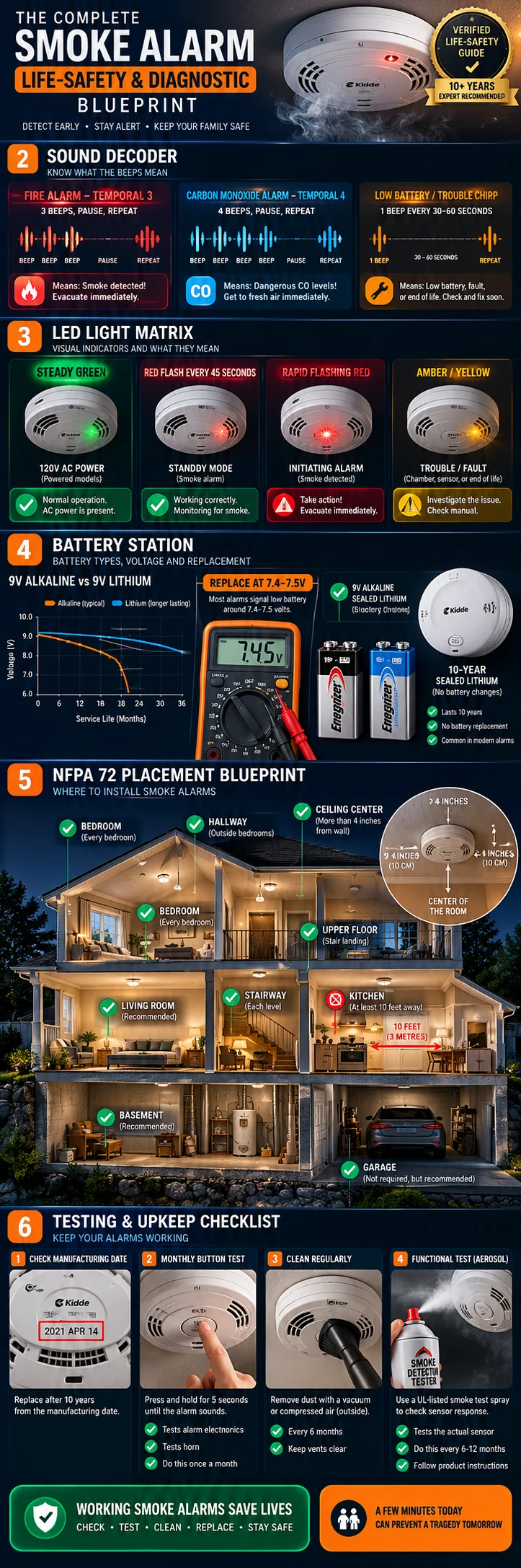
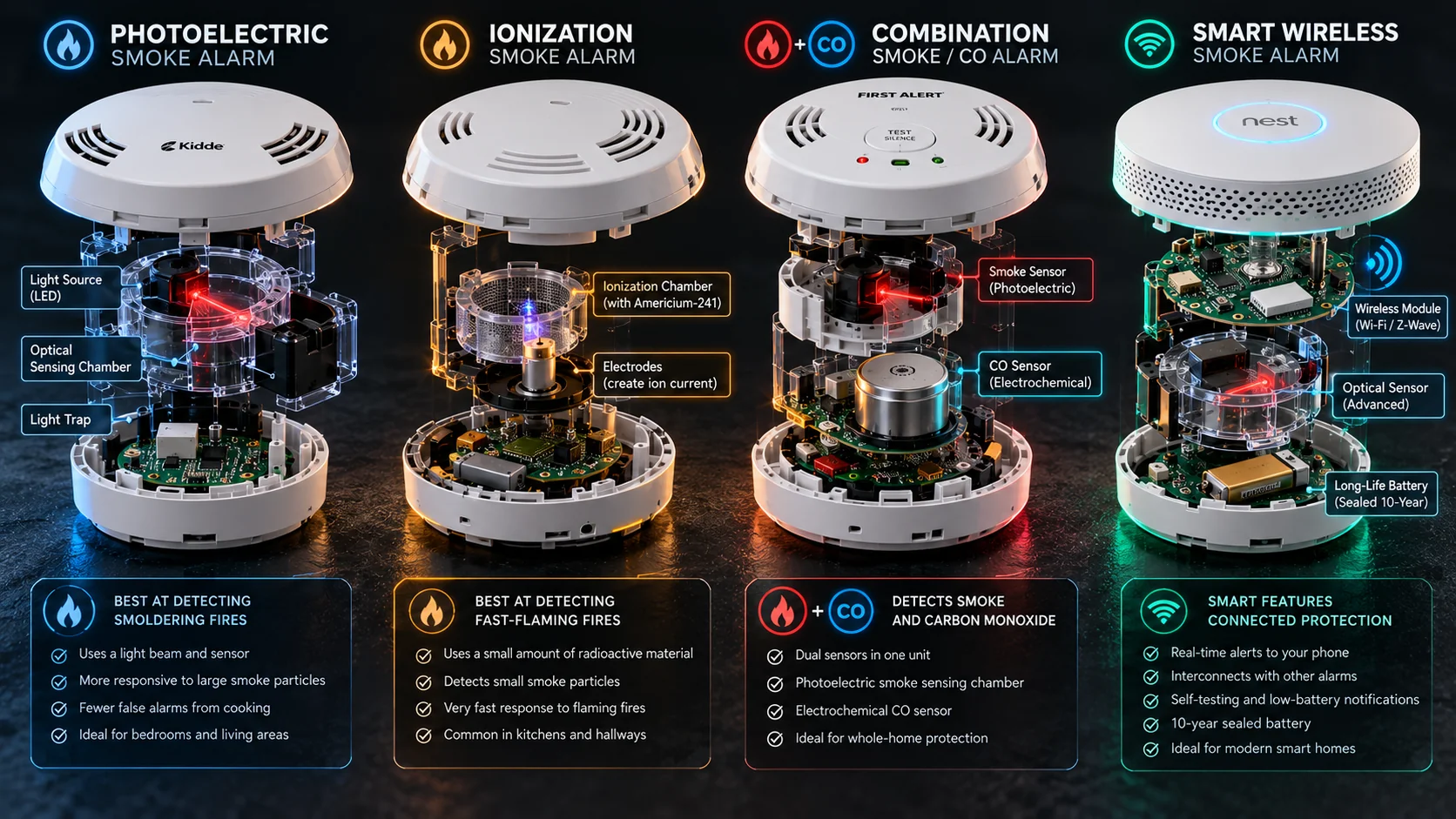
Residential smoke and fire detection systems utilize diverse sensory physics, power supplies, and communication protocols to protect life and property. Understanding the core categories under NFPA 72 Section 29.5 (photoelectric, ionization, dual-sensor, combination smoke/CO, smart Wi-Fi, and heat detectors) ensures appropriate placement for every living zone.
Master Smoke Alarm Technology Matrix
| Alarm Category | Detection Mechanism | Optimal Fire Target | Recommended Installation Zones |
|---|---|---|---|
| Photoelectric (Optical) | 940 nm infrared beam light-scattering photodiode | Smoldering, smoky fires (burning foam, fabrics, wires) | Bedrooms, hallways, living rooms, near kitchens |
| Ionization | Americium-241 alpha radiation ion-current disruption | Fast-flaming, clean-burning fires (paper, wood, grease) | Restricted; avoid within 20 ft of kitchens or bathrooms |
| Dual-Sensor (Photo + Ion) | Dual independent chambers in a single housing | Broad detection of both smoldering and flaming fires | Central common corridors, living rooms, dining halls |
| Combination (Smoke + CO) | Optical smoke sensor + electrochemical CO cell | Simultaneous fire and toxic carbon monoxide detection | Inside bedrooms and outside sleeping corridors |
| Heat Detectors (Rate-of-Rise) | Thermal thermistor triggering at 135°F or 15°F/min rise | High-heat combustion where smoke sensors would false alarm | Kitchens, unfinished attics, mechanical boiler rooms, garages |
| Smart Wi-Fi Connected | Optical sensor paired with 2.4 GHz Wi-Fi / Bluetooth LE | Full fire detection with remote smartphone push notifications | Whole-home coverage for remote homeowner monitoring |
1. Photoelectric (Optical) Smoke Alarms
Photoelectric alarms utilize the Tyndall optical effect. An internal infrared light-emitting diode (LED) projects a beam across a dark sensing labyrinth. When combustion smoke particles enter the chamber, they scatter light onto an off-axis photodiode, triggering the 85 dBA horn.
Photoelectric alarms respond 15 to 50 minutes faster to smoldering synthetic foam fires than ionization alarms. Because modern furniture contains dense polyurethane foam that produces heavy toxic smoke before bursting into flame, photoelectric technology is the primary standard recommended by fire chiefs.
2. Ionization Smoke Alarms
Ionization alarms contain a minute radioactive source of americium-241 that ionizes air molecules between two charged plates, maintaining a tiny continuous electric current. When fast-flaming combustion particles enter the chamber, they neutralize the ions, dropping the electrical current and sounding the horn.
While fast-acting for paper and kindling fires, ionization alarms trigger frequent nuisance alarms from cooking steam, prompting residents to disconnect power. Consequently, multiple jurisdictions have restricted ionization units in residential construction.
3. Combination Smoke and Carbon Monoxide Alarms
Combination alarms integrate an optical smoke chamber and an electrochemical carbon monoxide cell into a single ceiling unit. Under NFPA 72 and UL 2034, these units communicate threats using distinct acoustic patterns (Temporal 3 for fire, Temporal 4 for CO) and human voice announcements. They must be replaced every 7 to 10 years when the electrochemical CO sensor reaches expiration.
4. Heat Alarms for Hostile Environments (Kitchens & Garages)
Smoke alarms are legally prohibited in dusty, unconditioned garages and within 10 feet of cooking ranges due to extreme nuisance false alarms. In these locations, building codes permit thermal heat alarms. Heat alarms trigger when ambient temperatures exceed 135°F (57°C) or rise faster than 15°F per minute, providing thermal fire detection without false triggers from vehicle exhaust or cooking fumes.