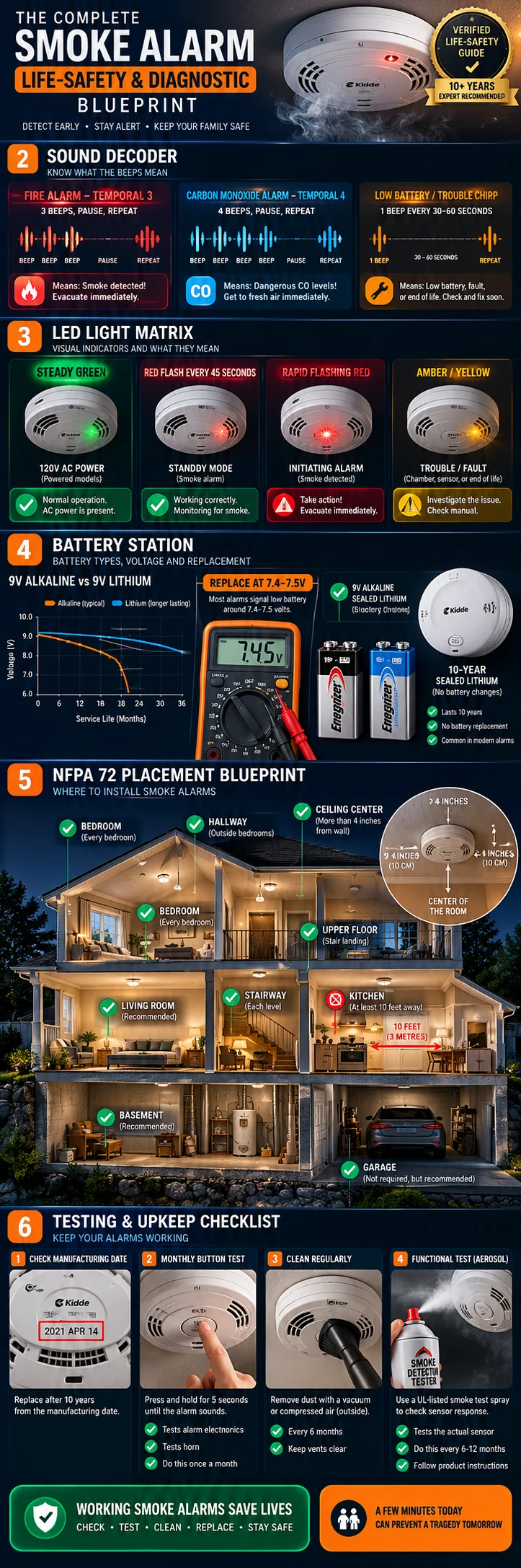
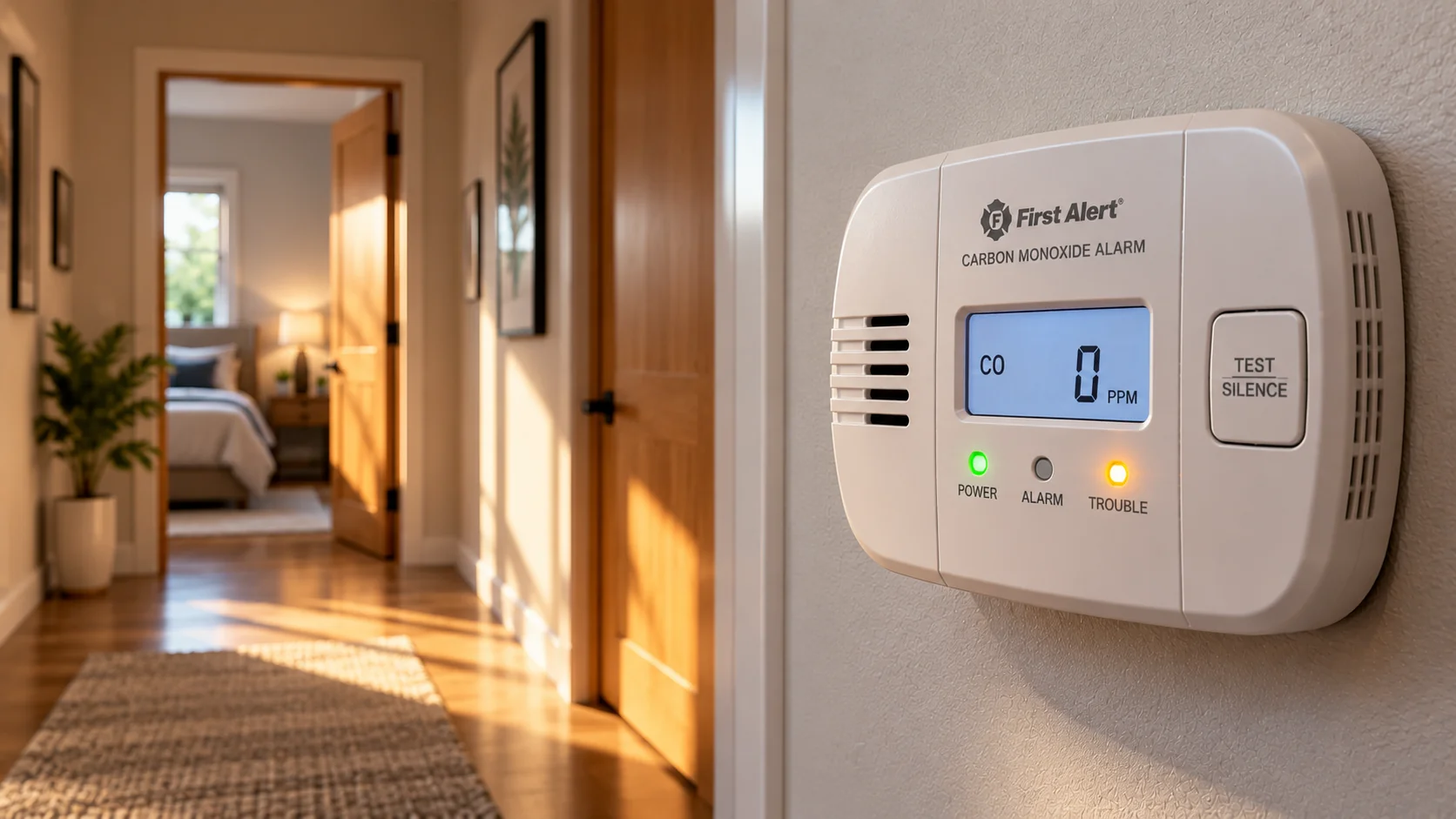
First Alert and BRK Brands manufacture the most widely installed contractor-grade residential smoke and carbon monoxide alarms in North America. Understanding the distinctive engineering specifications of their core product line (including 9120B, 7010B, SC9120B, PRC710, and SA3210) ensures appropriate selection and reliable whole-home installation under NFPA 72 standards.
First Alert & BRK Core Residential Model Comparison
| Model Number | Sensor Technology | Power Supply Architecture | Key Mechanical & Electronic Features |
|---|---|---|---|
| First Alert 9120B (BRK 9120B) | Dual-Chamber Ionization | 120V AC Hardwired + 9V Alkaline Backup | EZ Access side battery drawer, red lockout arm, interconnect |
| First Alert 7010B (BRK 7010B) | Photoelectric Optical Chamber | 120V AC Hardwired + 9V Alkaline Backup | High resistance to cooking nuisance alarms, side battery tray |
| First Alert SC9120B | Photoelectric Smoke + Electrochemical CO | 120V AC Hardwired + 9V Alkaline Backup | Combination hazard protection, latching alarm memory LED |
| First Alert PRC710 | Photoelectric Smoke + Electrochemical CO | 10-Year Sealed Lithium Power Pack | Slim profile (half standard depth), bracket-activated power |
| First Alert SA3210 | Dual Sensor (Optical + Ionization) | 10-Year Sealed Lithium Power Pack | Comprehensive fire detection across smoldering and flash fires |
Proprietary First Alert Engineering Features
1. EZ Access Side-Loading Battery Drawer
Unlike older smoke alarms that require twisting the unit off the ceiling bracket to change a battery, First Alert contractor models (9120B, 7010B, SC9120B) feature a patented slide-out drawer on the side of the housing. This allows homeowners to replace backup 9V batteries safely from a step stool without touching electrical wiring.
2. The Red Lockout Pin & Tamper Resistance
Inside the EZ Access battery drawer sits an OSHA-compliant bright red plastic lockout lever. If a battery is omitted or inserted backwards, this lever stands upright, physically preventing the drawer from closing flush into the casing. A sensitive internal microswitch monitors drawer closure. If the drawer is open even 1 millimeter, the alarm emits a single trouble chirp once every 60 seconds to notify residents that the unit lacks emergency backup power.
3. Latching Alarm Memory Red LED
When multiple First Alert alarms are hardwired together, an alarm trigger causes all units to sound. The specific alarm that initiated the siren maintains an internal memory latch, pulsing its red LED once every 5 seconds for up to 24 hours after the siren ceases. This enables homeowners to immediately pinpoint which room experienced smoke or a false trigger. Pressing the Test/Silence button clears the latch.
4. Hardwired Interconnect Traveler Compatibility
First Alert and BRK hardwired units use a 3-wire quick-connect harness utilizing an Orange wire as the 9VDC interconnect traveler conductor (unlike Kidde, which uses a red or yellow wire). Up to 18 initiating First Alert smoke alarms and 6 auxiliary relays or horn strobes can be linked together across 1,000 feet of copper conductor.