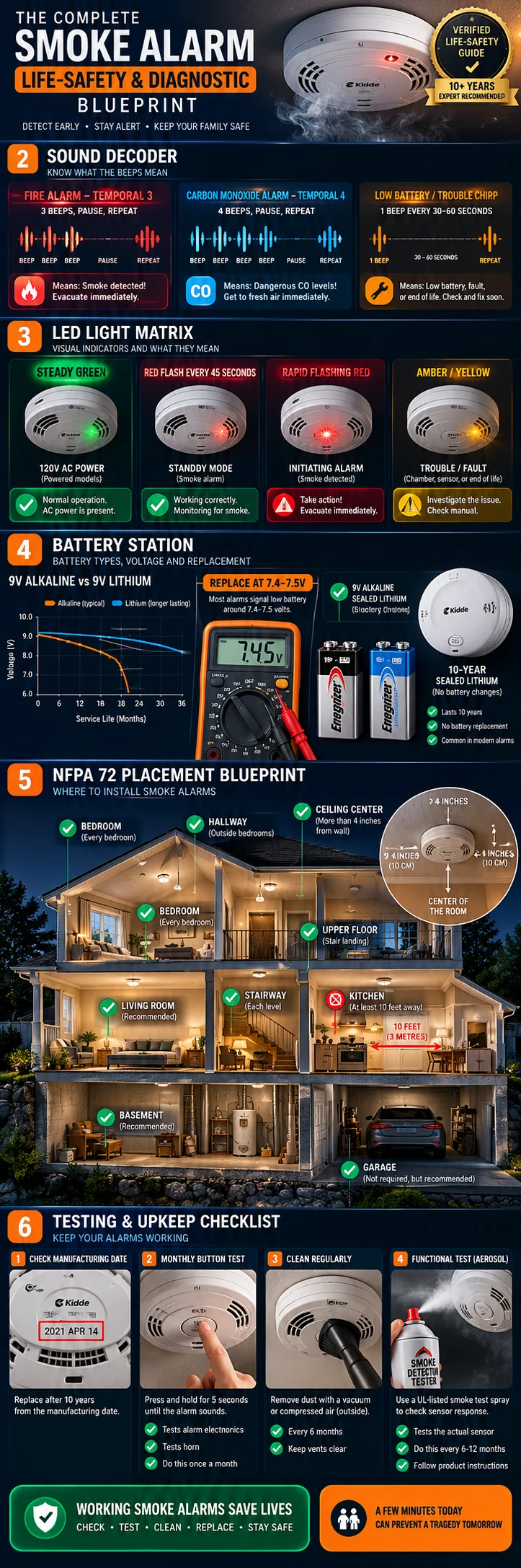
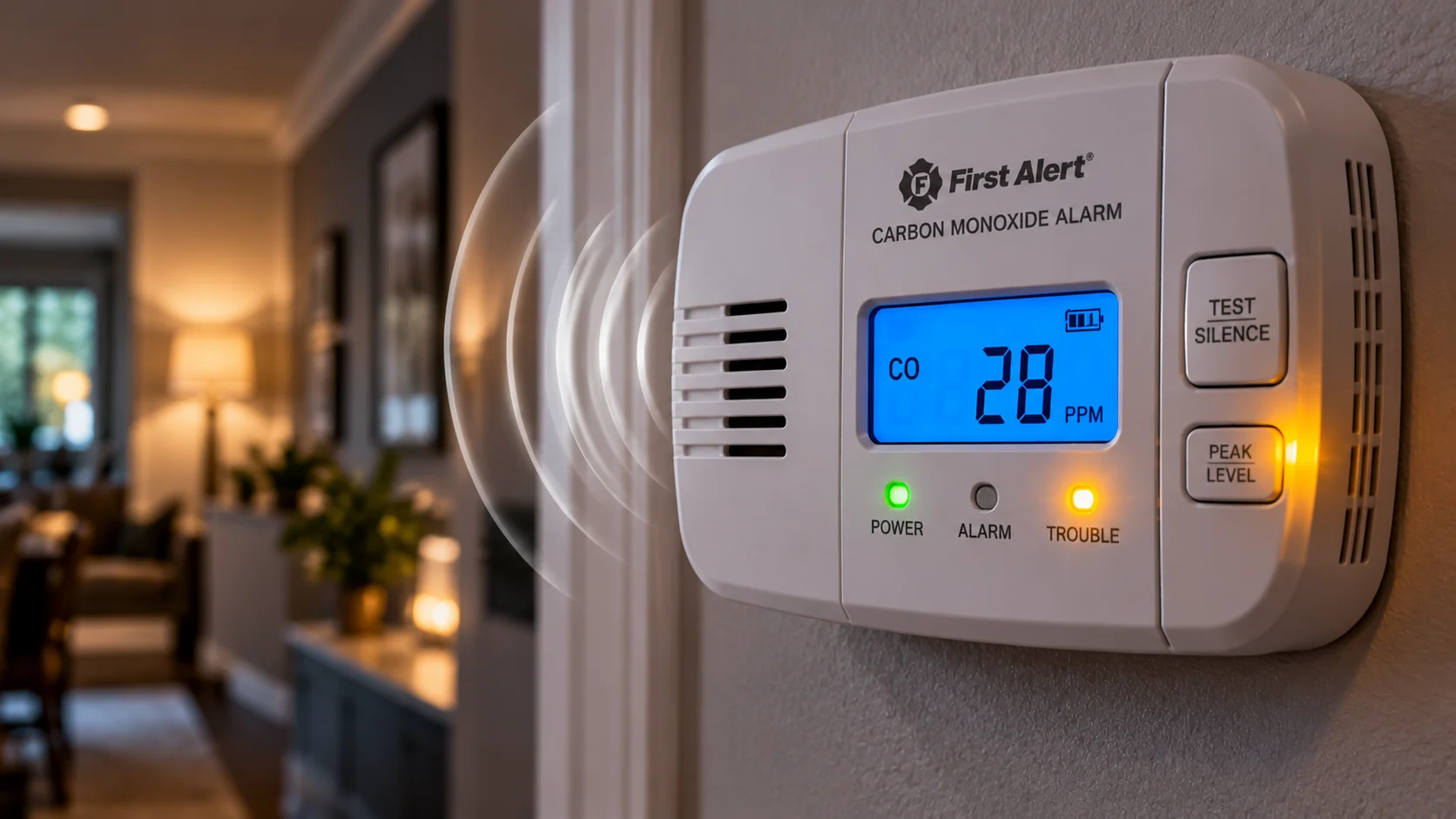
Carbon monoxide (CO) is a colorless, odorless, and non-irritating toxic gas generated by the incomplete combustion of fossil fuels. Governed by NFPA 72 (incorporating provisions formerly in NFPA 720) and UL 2034 standards, residential carbon monoxide detectors utilize calibrated electrochemical cells to measure gas concentration in parts per million (PPM), providing life-saving warning before toxic carboxyhemoglobin saturation occurs.
Gas Density & Height: Debunking the Floor vs. Ceiling Myth
A persistent consumer myth claims that carbon monoxide is heavier than air and sinks to the floor. Chemical physics and environmental gas diffusion testing disprove this completely:
| Atmospheric Gas | Chemical Formula | Molecular Weight (Molar Mass) | Vapor Density vs. Air | Room Diffusion & Mounting Mandate |
|---|---|---|---|---|
| Carbon Monoxide | CO | 28.01 g/mol | 0.967 (Slightly lighter than air) | Diffuses uniformly throughout room air currents; ceiling or wall mount compliant |
| Ambient Air (Mixture) | N2 (~78%) + O2 (~21%) | 28.97 g/mol (Average) | 1.000 (Reference baseline) | Standard ambient atmospheric buoyancy layer |
| Carbon Dioxide | CO2 | 44.01 g/mol | 1.520 (Significantly heavier) | Settles near low floor depressions in stagnant unventilated spaces |
| Natural Gas (Methane) | CH4 | 16.04 g/mol | 0.554 (Substantially lighter) | Rises rapidly to the highest ceiling points and ceiling pockets |
Because the molar mass of carbon monoxide (28.01 g/mol) is nearly identical to dry air (28.97 g/mol), thermal convection from home heating systems, human movement, and forced-air HVAC circulation causes carbon monoxide to mix evenly throughout the entire vertical breathing zone. Under NFPA 72 Section 29.8, alarms can be mounted on ceilings or on walls. For models with digital PPM screens, eye-level wall mounting (4 to 5 feet from the floor) provides optimal visibility.
UL 2034 5th Edition Mandatory Gas Response Windows
Unlike smoke alarms which alarm within seconds of particulate entry, carbon monoxide detectors incorporate time-weighted integration algorithms matching human physiological carboxyhemoglobin uptake:
| CO Gas Concentration | Mandatory Response Window (UL 2034) | Human Physiological Health Impact |
|---|---|---|
| 30 PPM | No alarm permitted for at least 30 days | Normal environmental exposure; prevents false alarms |
| 70 PPM | Must alarm between 60 and 240 minutes | Mild headache, fatigue, and shortness of breath in 2 hours |
| 150 PPM | Must alarm between 10 and 50 minutes | Severe headache, dizziness, nausea, and mental confusion |
| 400 PPM | Must alarm between 4 and 15 minutes | Loss of consciousness, brain damage, and death within 1 to 2 hours |
Physical Placement & Mounting Height Rules
A persistent myth in home safety is that carbon monoxide is heavy and settles near the floor. It does not:
- Equal Atmospheric Density: Carbon monoxide has a molar mass of 28.01 g/mol, nearly identical to ambient air (28.97 g/mol). Carbon monoxide diffuses evenly and thoroughly throughout the air column.
- Eye-Level Mounting Advantage: Mounting CO detectors at 5 feet above finished floor level (eye level) allows occupants to easily view real-time digital PPM readouts and reach push-to-test buttons.
- Ceiling Mounting: Ceiling installation is fully code-compliant (especially for combination smoke/CO units), provided the unit is kept at least 4 inches away from side walls.
- Required Locations: Install a detector on every habitable story of the home, outside every separate sleeping area within 21 feet of bedroom doors, and inside any room containing a fuel-burning appliance (furnace, water heater, or gas fireplace).
Electrochemical Sensor Lifespan & Expiration
Every carbon monoxide detector contains an internal electrochemical cell containing a liquid electrolyte. Over 7 to 10 years, this chemical gel slowly dehydrates and catalytic electrodes oxidize.
When the internal microchip countdown timer expires, the unit sounds a persistent end-of-life signal and displays "End". Once an alarm enters end-of-life status, no battery replacement will silence it. The entire alarm must be retired and replaced immediately under NFPA 72 and UL 2034.