Smoke Alarm Brands: Kidde, First Alert & Nest Protect
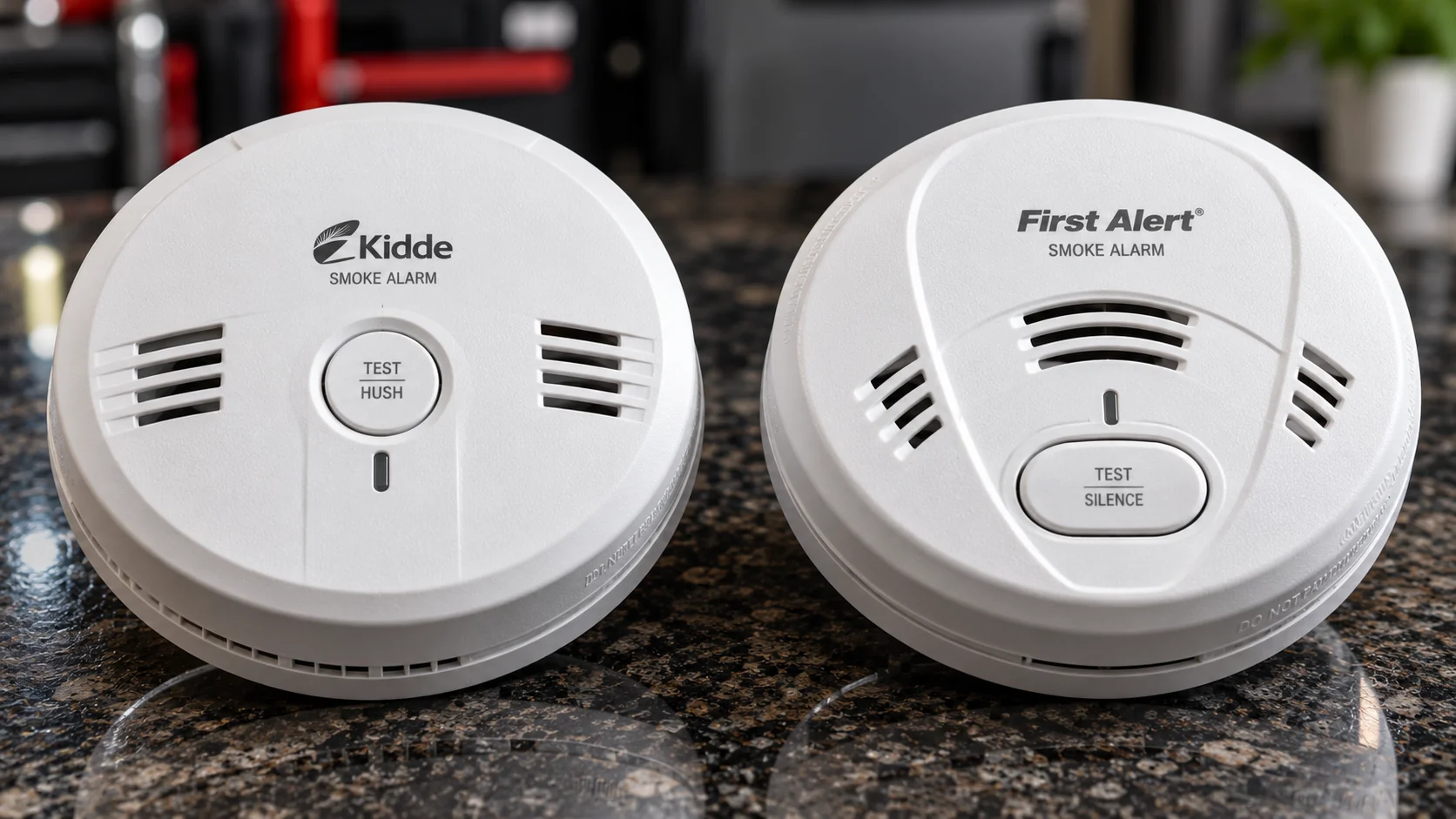
Kidde and First Alert (BRK) are the dominant manufacturers in residential life-safety, both producing UL-certified equipment that satisfies NFPA 72 requirements. Selection is frequently mandated by existing hardwired infrastructure; wiring harnesses and interconnect signal protocols are typically proprietary, requiring replacements to be brand-matched to avoid whole-home system failure.
Manufacturer Compatibility Matrix
| Kidde: Extensive hardwired lineup; known for proprietary interconnect and voice-synthesis integration.
| First Alert/BRK: Standard-bearer for commercial-grade hardwired residential systems; durable interconnect logic.
| Nest Protect: Premium smart-device segment; focuses on remote monitoring, voice annunciation, and self-testing.
| Adapter Compatibility: Harnesses are brand-locked; mixing signal protocols risks silent downstream failures during fire events.
Strategic Brand Selection Strategy
- Existing Infrastructure: Do you have existing hardwired alarms? If yes, identify the brand (look for stamps on the unit or harness). Match the brand to minimize rewiring labor.
- Interconnect Signaling: Signaling pulses are non-standard across brands. Mixing them causes system failure, leaving downstream units silent during fire events.
- Smart Functionality: For cloud-integrated features, Nest Protect is the industry leader, but it requires periodic Wi-Fi maintenance to ensure remote notification health.
- Warranty Integrity: Keep all installation receipts. Warranty claims are voided by improper cross-brand wiring or use of unauthorized (non-UL listed) adapters.
Kidde: Engineering Overview
Kidde provides one of the broadest arrays of residential smoke and CO systems. Their product lines are heavily optimized for hardwired interconnectivity, using proprietary wiring harness designs that are reliable but force homeowners into a long-term brand ecosystem.
Technical Highlights: Their "TruSense" technology effectively filters cooking aerosols, significantly reducing nuisance alarms in open-plan floor designs. Their voice-enabled interconnected units are designed for straightforward mounting on existingKidde-standardized junction plate brackets.
First Alert (BRK): Engineering Overview
BRK Electronics (the parent company of First Alert) is a titan of residential fire alarm engineering, often chosen by home builders due to the robust interconnectivity of their hardwired hardware.
Technical Highlights: First Alert units excel in "fire-hardening" scenarios-industrial/commercial-grade quality that holds up well in temperature-extreme residential areas like basements or attic-adjacent hallways. They focus heavily on mechanical reliability and consistent temporal-3 alert timing.
Nest Protect: Smart System Integration
Nest Protect is designed for homeowners prioritizing data-driven diagnostics.
- Proactive Intelligence: It performs self-checks automatically, reporting on the health of the speaker, processor, and battery.
- Voice Annunciation: It identifies the type of alarm (Fire vs CO) and the exact location (e.g., "Hallway"), which is critical in multi-level residential layouts.
- App Notifications: Provides real-time alerts if the occupant is away from the dwelling, providing visibility into the emergency status before fire responders arrive.
Harness Compatibility: A Warning
The most common cause of multi-unit alarm failure is the "adapter hack." Homeowners frequently attempt to use generic "pig-tail" adapters to switch from one brand to another (e.g., Kidde to BRK) to avoid rewiring the junction box.
Risk Assessment: These adapters are often not UL-listed for the specific device combinations, and the signaling pulse characteristics (amplitude/frequency) of different brands may conflict. An interconnect line driven by a mismatched unit can result in the entire signal pulse being distorted, leaving all downstream detectors (the units furthest from the trigger) completely silent. Always replace hardwired units by brand-matching the installed base.
Smoke Alarm Guide Editorial Team
Our life-safety engineering documentation is curated by certified fire alarm designers, electrical inspectors, and fire protection experts. All diagnostics and emergency response procedures are mapped directly to UL 217/2034 safety standards, NFPA 72 codes, and recognized municipal fire marshal protocols.
Related Guides & Next Steps
Verified Primary Sources & Reference Standards
- NFPA 72: National Fire Alarm and Signaling Code (Signaling compatibility).
- Underwriters Laboratories UL 217: Standard for Smoke Alarms (Sensor performance metrics).
- Manufacturer Technical Manuals: Kidde, First Alert/BRK, and Google/Nest support libraries.
Frequently Asked Questions
Which smoke alarm brand is the most reliable?
Can I replace a Kidde alarm with a First Alert unit?
What makes Nest Protect unique compared to standard alarms?
Are Kidde and BRK the same company?
Do all these brands offer 10-year sealed battery units?
Why is hardwired harness compatibility important?
Which brand has the best warranty terms?
Can smart alarms function without internet connectivity?
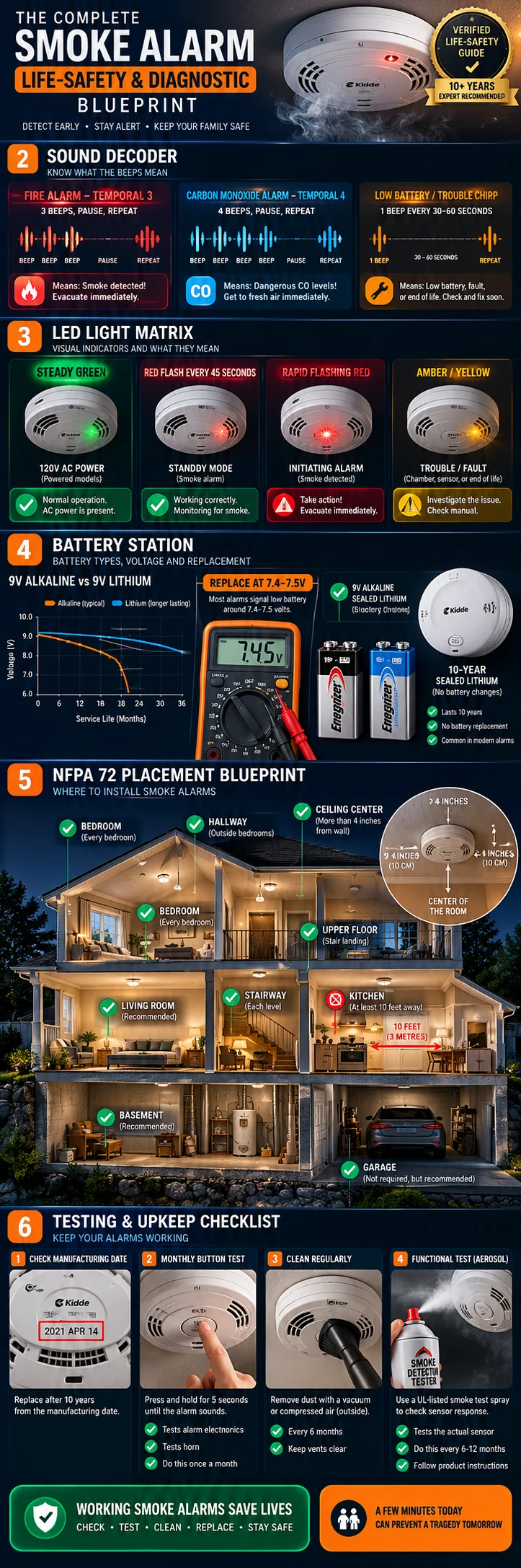
Complete Smoke Alarm & Life-Safety Master Infographic
Scroll through this complete technical reference to diagnose chirps, decode LED indicator lights, check battery voltages, and verify NFPA 72 whole-home placement rules directly on this page.