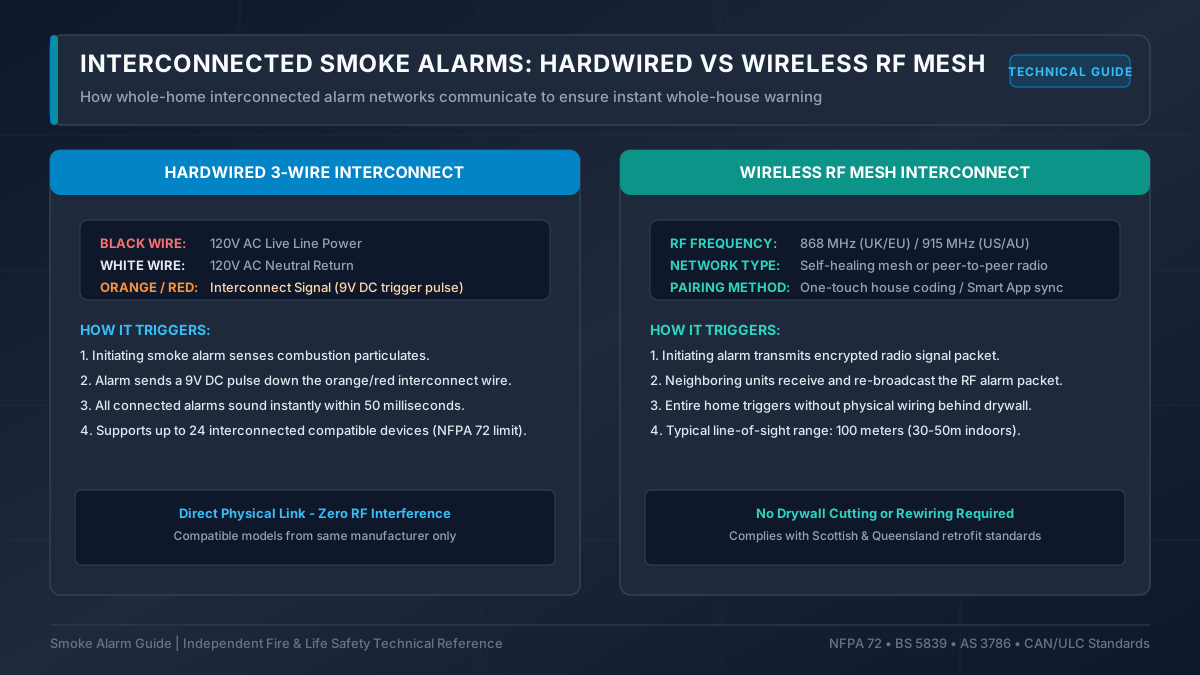
Interconnected smoke alarms communicate across a network so that when one alarm detects smoke, all alarms sound simultaneously. Systems use either hardwired 3-wire cabling (red traveler wire) or wireless radiofrequency (RF) mesh networking (e.g. 433 MHz/915 MHz), providing critical early warning across multi-story homes.
NFPA 72 Spatial Clearance & Layout Rules
Interconnection Method:
• Hardwired 3-Wire: Best for new construction or homes with existing AC ceiling cabling.
• Wireless RF Mesh: Best for retrofitting existing homes without tearing into drywall.
• Hybrid Systems: Bridge modules allow hardwired networks to link wirelessly to standalone battery alarms.
In a home with non-interconnected alarms, a fire starting in a basement or garage may not be heard by occupants sleeping upstairs behind closed bedroom doors until toxic smoke has filled escape hallways.
Hardwired vs Wireless RF Interconnection
| System Feature |
Hardwired 3-Wire Interconnect |
Wireless Radiofrequency (RF) Mesh |
| Signal Transmission |
9V DC logic pulse on red/orange traveler wire |
Encrypted RF radio signals (433 / 868 / 915 MHz) |
| Installation Effort |
Requires running cables through walls/ceilings |
Wireless pairing; mounts to standard drywall |
| Retrofit Suitability |
Difficult in finished existing homes |
Ideal for retrofitting older homes |
| Reliability |
100% immune to wireless RF interference |
Highly reliable with multi-hop mesh routing |
Important Safety Guideline
Interconnected alarms are required in some jurisdictions and building types; verify the applicable local code in all new residential construction across the US, UK, Canada, and Australia.