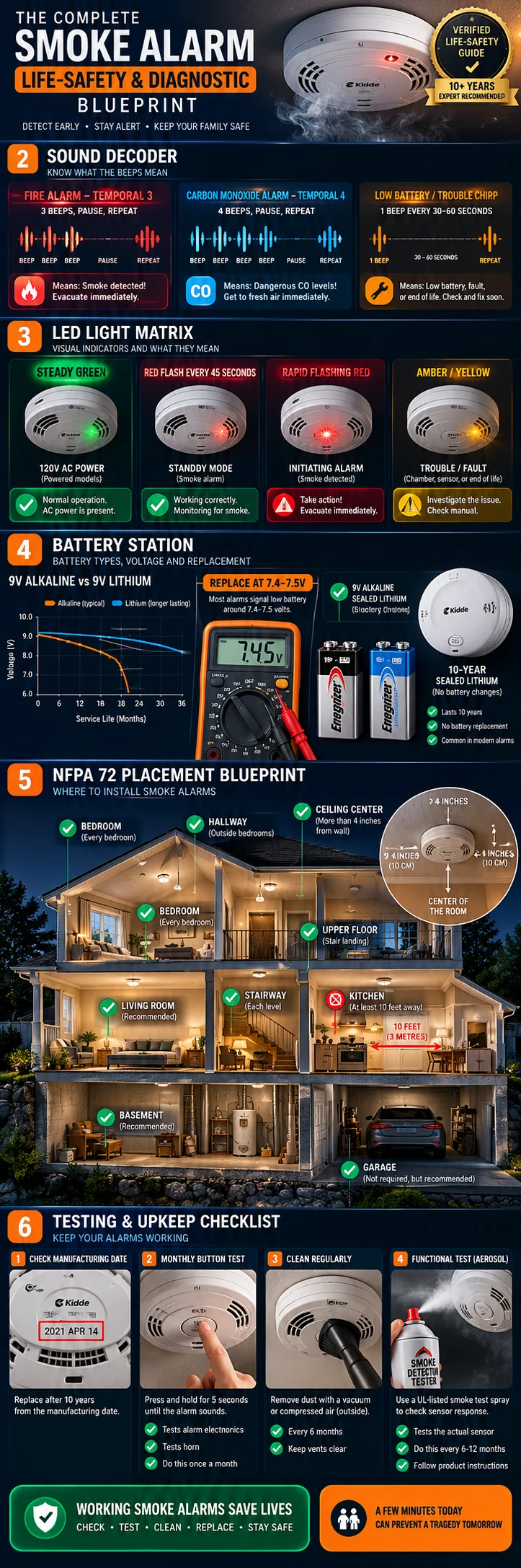
Carbon monoxide (CO) is a fatal, invisible, odorless poison gas. Testing a carbon monoxide detector under NFPA 72 and UL 2034 standards requires distinguishing between electronic push-button checks and certified functional test gas challenges to verify that internal electrochemical sensing cells are actively detecting gas molecules.
Push-Button Testing vs True Functional Gas Testing
| Testing Method | Target Evaluated | Frequency | What It Proves & Limitations |
|---|---|---|---|
| Push-to-Test Button | Electronic circuit board, horn sounder, battery voltage | Monthly | Proves electronics and horn work; does NOT prove the chemical sensor can detect CO |
| UL Certified Canned CO Gas | Aqueous electrochemical catalytic sensing cell | Technician / Periodic | Specialized functional test proving gas diffusion; not required for routine homeowner maintenance |
Step 1: The Monthly Push-to-Test Electronics Check
CPSC Sensor Testing Limitation Notice
Under official US Consumer Product Safety Commission (CPSC) guidance, pressing the test button on a residential carbon monoxide detector confirms that the internal microprocessor, battery voltage, and audible horn circuit are operational. The test button does NOT verify the quantitative accuracy or calibration of the electrochemical CO sensing cell. Homeowners should never attempt to calibrate sensors; replace the entire unit at the manufacturer-specified expiration interval (typically 5 to 10 years).
- Notify household occupants that you are initiating a safety test.
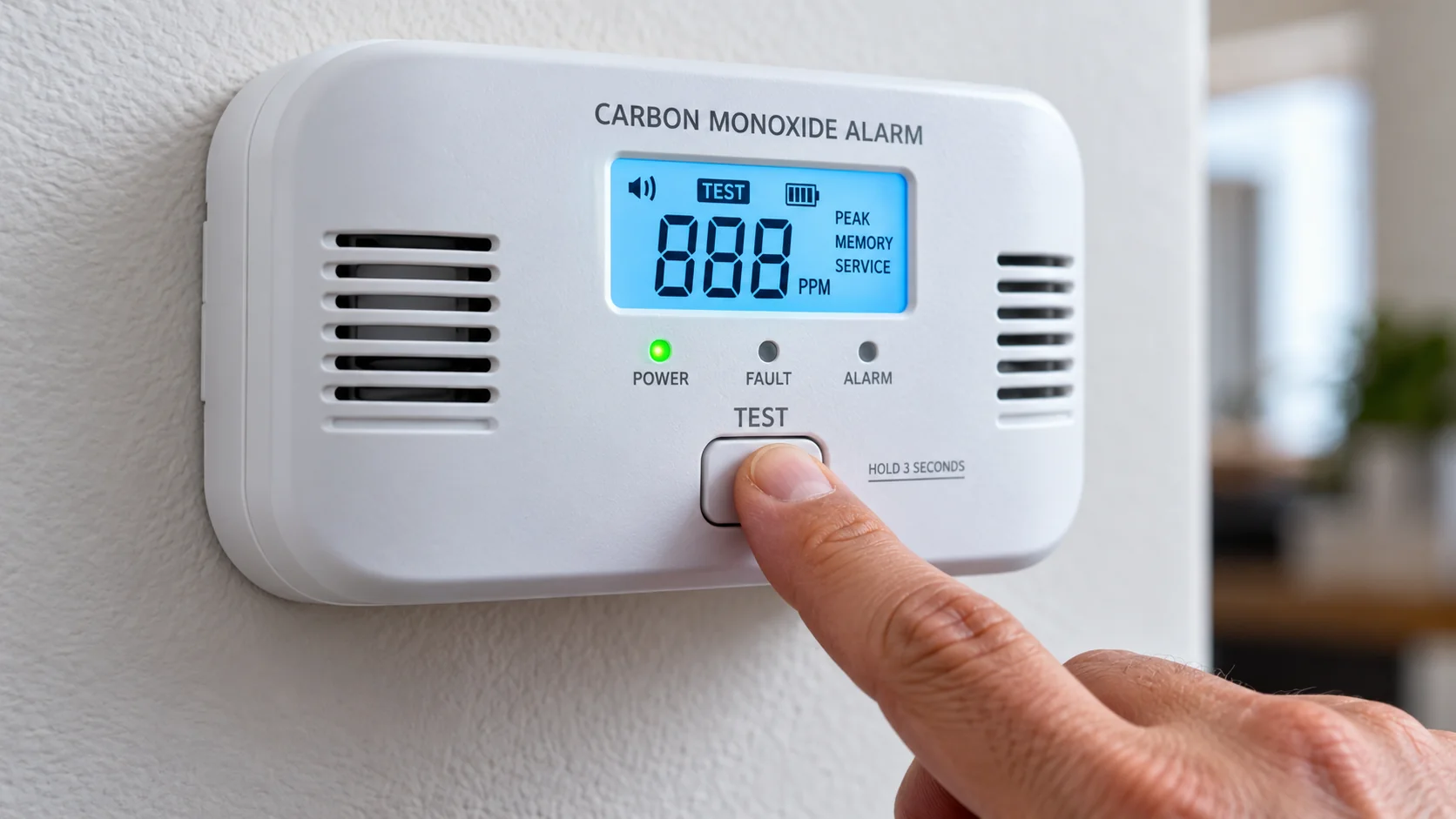
- Press and hold the center Test / Reset button firmly for 3 to 5 seconds.
- Verify the standardized Temporal 4 audible pattern: 4 quick horn beeps, a 5-second silence pause, followed by 4 quick horn beeps.
- Check the digital LCD display if equipped. The screen should illuminate, run an 888 pixel test, and briefly display simulated gas readings or "0 PPM" before returning to quiet standby.
- Release the button. If the unit fails to sound, immediately replace the batteries or the entire detector if sealed.
Step 2: Specialized Functional Sensor Testing (Technician Inspection)
Under NFPA 72 Section 14.4.4.3 and manufacturer service bulletins, specialized functional smoke and gas-entry testing is performed during professional commercial and residential inspection protocols. Certified aerosol test gas confirms physical diffusion across the membrane when authorized by device listing guidelines. Homeowners are not required to purchase canned gas for routine residential maintenance:
- Procure an aerosol canister of certified carbon monoxide detector test gas (such as Solo C3 or a certified 100 PPM test gas ampoule).
- Place the carbon monoxide detector inside a clear zip-top plastic bag or test shroud alongside the delivery nozzle.
- Spray a brief, 2-to-3 second burst of test gas into the enclosure and seal the opening.
- Within 2 to 5 minutes, as carbon monoxide molecules diffuse across the internal electrochemical membrane, the digital display should register rising PPM levels, followed by full Temporal 4 emergency sirens.
- Remove the unit from the bag, ventilate in fresh outdoor air, and press Reset to restore standby monitoring.
Lethal Danger Warning: Never Test with Car Exhaust or Barbecue Smoke
A dangerous practice found on internet forums recommends holding a detector behind an automobile tailpipe or over burning charcoal briquettes:
- Extreme Toxicity Hazard: Vehicle exhaust contains lethal carbon monoxide concentrations exceeding 5,000 to 10,000 PPM, creating severe acute inhalation hazards for occupants and pets.
- Sensor Poisoning: Raw vehicle exhaust contains unburned hydrocarbons, sulfur dioxide, and hot oily soot that permanently coat and ruin the electrochemical catalytic electrodes, rendering the detector completely blind to future real leaks.