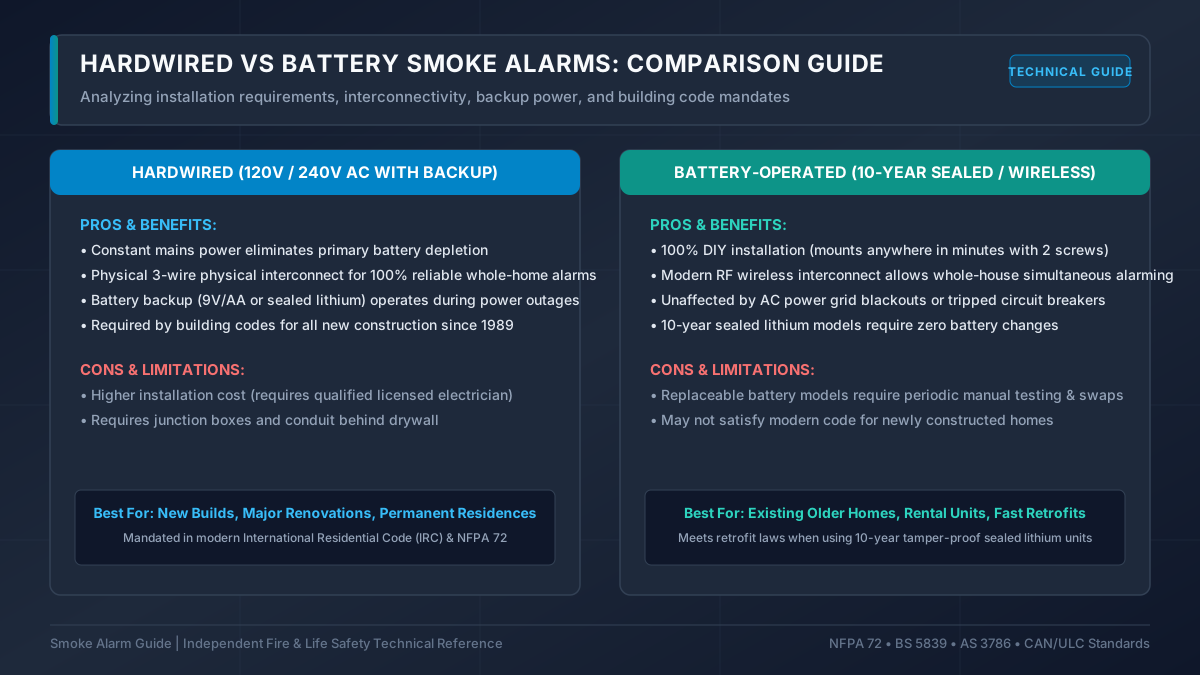
Hardwired smoke alarms draw continuous power from the home electrical system with a battery backup for outages, offering maximum reliability and built-in interconnection. Battery-powered alarms install in minutes with no electrical work, making them ideal for retrofitting older homes without cutting walls.
Battery Chemistry & Voltage Quick Reference
Which System Fits Your Home?
• New Construction / Major Remodel: Hardwired with battery backup (mandated by building codes).
• Existing Home with Existing Ceiling Wires: Replace with new hardwired units matching plug harnesses.
• Existing Home without Wiring: 10-year sealed lithium battery alarms with wireless RF interconnection.
Both hardwired and modern battery smoke alarms provide life-saving detection. Evaluating building code mandates, installation labor, and maintenance requirements clarifies the optimal choice.
Feature & Performance Comparison
| Feature |
Hardwired with Battery Backup |
Standalone 10-Year Battery |
| Primary Power |
120V / 240V AC Mains Power |
Internal 10-Year Lithium Cell |
| Power Outage Protection |
Yes (automatic switch to backup battery) |
Yes (operates independently of grid) |
| Interconnection |
Standard 3-wire hardwired traveler or RF |
Wireless Radiofrequency (RF) mesh |
| Installation Complexity |
Requires junction boxes and AC wiring |
Mounts with two drywall screws in 5 minutes |
| Code Compliance |
Mandated in all new builds post-1990s |
Permitted in existing homes lacking wiring |
Important Safety Guideline
Never downgrade a hardwired smoke alarm system to battery-only units. Building codes require maintaining original construction safety specifications.