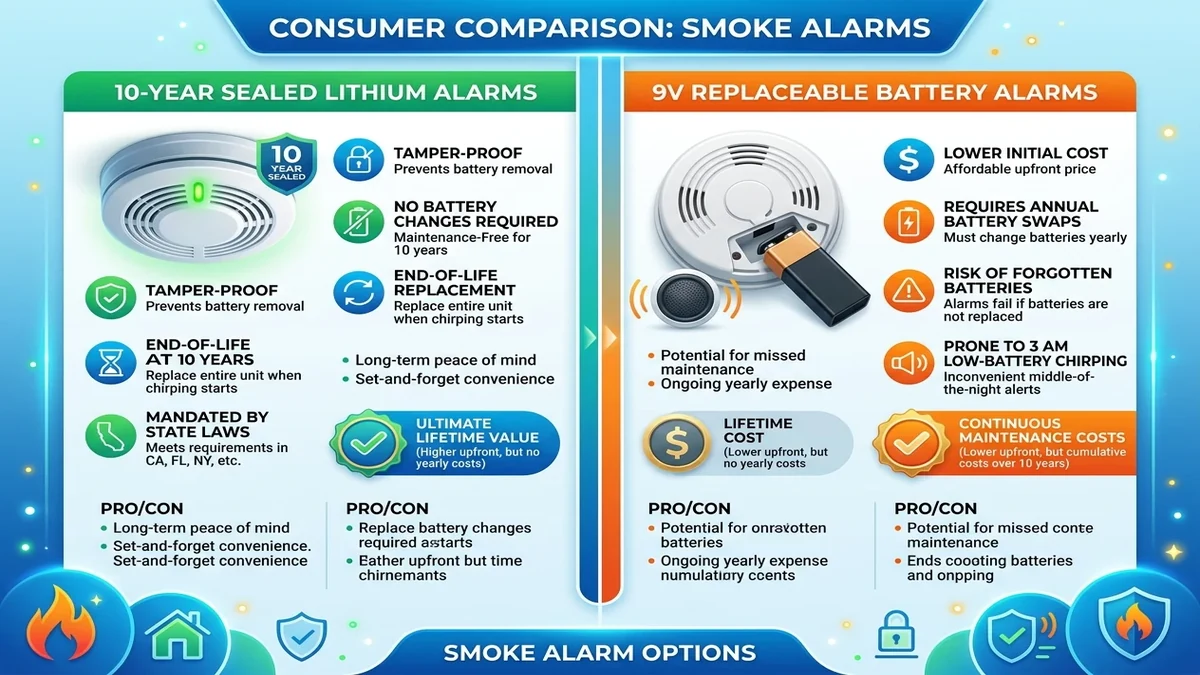
The transition toward 10-year sealed lithium smoke alarms represents one of the most significant life-safety upgrades in residential building codes.
Head-to-Head Architectural Comparison
| Comparison Factor | 10-Year Sealed Lithium Alarm | Replaceable Battery Alarm (9V/AA) |
|---|---|---|
| Initial Purchase Cost | Higher ($25 - $50 per unit) | Lower ($12 - $25 per unit) |
| 10-Year Total Cost of Ownership | Lower (zero replacement battery purchases) | Higher ($20 - $40 in batteries over 10 years) |
| Maintenance Effort | Zero battery swaps; monthly button test only | Annual battery replacements on ladders |
| Tamper Resistance | High (battery cannot be stolen for toys/remotes) | Low (occupants often remove batteries to stop chirps) |
| Statutory Compliance | Complies with modern 10-year sealed legislation | Prohibited for battery replacements in CA, NY, IL, etc. |
How 10-Year Deactivation Switches Work
When a 10-year sealed smoke alarm reaches its end-of-life date (or fails), it features a permanent deactivation mechanism on the rear casing. Inserting a screwdriver into the deactivation slot breaks an internal contact tab, safely discharging the lithium cell for recycling and permanently silencing end-of-life chirps. Once deactivated, the unit cannot be re-mounted or powered on.