Standard 9V alkaline batteries (Zinc-Manganese Dioxide) provide 1 to 2 years of power but experience steep voltage drops in cold rooms. 9V lithium batteries (Lithium-Manganese Dioxide, like Ultralife) provide 5 to 10 years of power, hold a flat 9V discharge curve, and virtually eliminate nighttime cold chirps.
Battery Chemistry & Voltage Quick Reference
9V Battery Selection:
• Standard 9V Alkaline: Low upfront cost ($3-$5); may require periodic testing according to the manufacturer or applicable maintenance procedure replacement; prone to winter nighttime chirps.
• 9V Lithium (Ultralife/Energizer): Higher upfront cost ($10-$15); lasts 5 to 10 years; flat discharge curve; ideal for high cathedral ceilings.
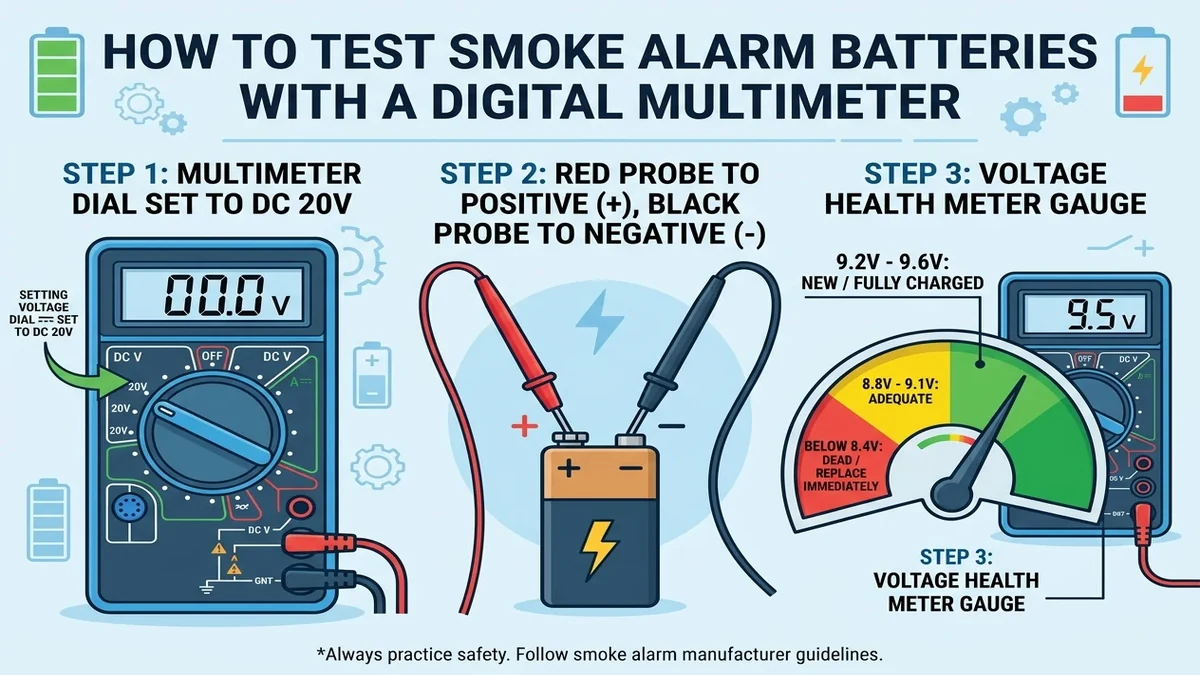
• Voltage Threshold: Low-battery chirp triggers when resting voltage drops below ~7.5V to 8.4V.
The 9-volt rectangular battery (PP3 / 6LR61) has been the universal power standard for residential smoke alarms for over four decades. Understanding battery chemistry differences ensures optimal performance.
Alkaline vs Lithium 9V Performance Comparison
| Specification |
9V Alkaline (Duracell / Energizer) |
9V Lithium (Ultralife / Energizer Ultimate) |
| Chemistry |
Zinc-Manganese Dioxide (Zn/MnO2) |
Lithium-Manganese Dioxide (Li/MnO2) |
| Nominal Voltage |
9.0V (initial open circuit ~9.5V) |
9.0V (initial open circuit ~9.8V) |
| Typical Service Life |
1 to 2 years |
5 to 10 years |
| Capacity (mAh) |
~500 to 600 mAh |
~1,200 mAh (more than double alkaline) |
| Operating Temperature |
0°F to 130°F (-18°C to 55°C) |
-40°F to 140°F (-40°C to 60°C) |
| Cold Drop Resistance |
Poor (voltage drops overnight, causing chirps) |
Excellent (virtually immune to cold chirps) |
Important Safety Guideline
Smoke alarms require substantial pulse current to drive the piezoelectric sounder during an active alarm. Always use high-quality brand-name alkaline or lithium cells specified by the manufacturer.