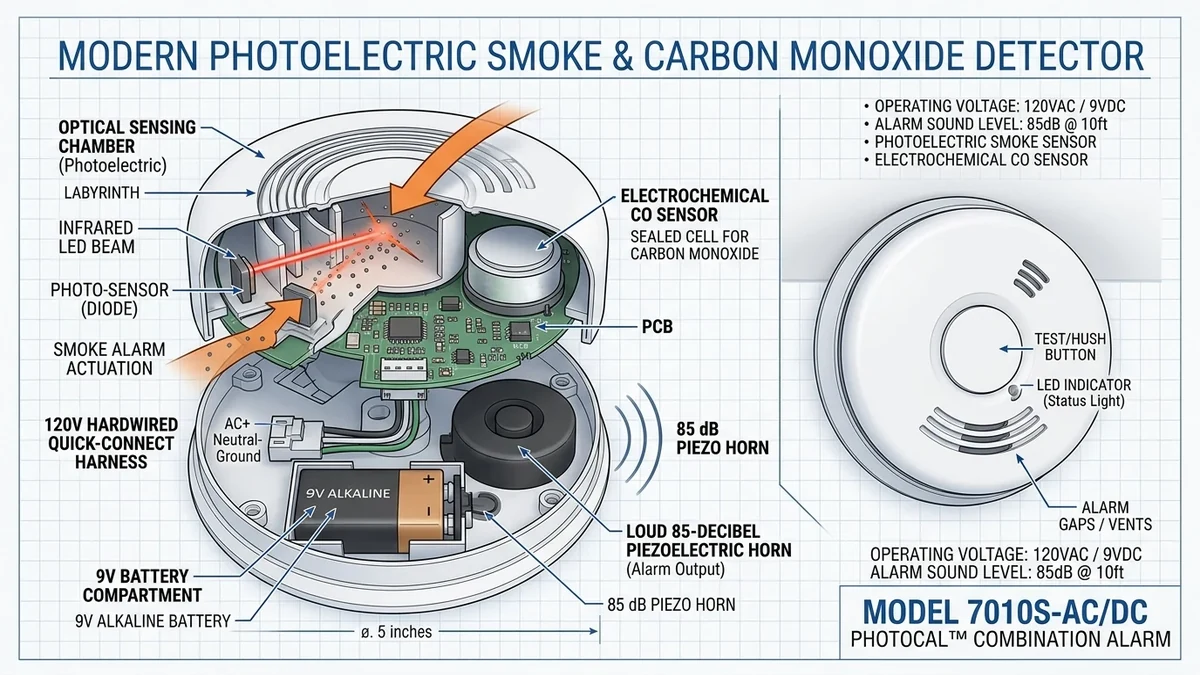
Smoke alarms detect airborne combustion particles to provide early warning for occupant life-safety escape in bedrooms and living areas. Heat detectors respond to rapid temperature spikes or high fixed temperatures (typically 135°F to 194°F), making them ideal for kitchens, garages, and attics where smoke alarms false-alarm.
Detection Physics & Combustion Response Profile
Device Application Guide:
• Bedrooms, Hallways & Living Areas: Smoke alarms (MANDATORY for human life-safety and sleeping escape).
• Garages, Unfinished Attics & Furnace Rooms: Heat detectors (resists vehicle exhaust, dust, and temperature swings).
• Kitchens & Boiler Rooms (where permitted): Heat detectors connected to household alarm network.
Smoke alarms and heat detectors perform complementary roles in complete residential fire protection layouts.
Technical Comparison
| Feature |
Smoke Alarm (Optical/Photoelectric) |
Heat Detector (Thermal) |
| Detection Trigger |
Airborne smoke particles and combustion aerosols |
Fixed high temperature (135°F+) or rapid temperature rise (15°F/min) |
| Primary Purpose |
Human life safety and early sleeping evacuation |
Property protection in harsh environments |
| Ideal Locations |
Bedrooms, hallways, living rooms, basements |
Garages, unfinished attics, kitchens, boiler rooms |
| False Alarm Resistance |
Prone to false alarms in dusty/steamy areas |
100% immune to dust, exhaust fumes, and steam |
Important Safety Guideline
Heat detectors should never be used as a replacement for smoke alarms in sleeping rooms or hallways. They activate only after substantial heat develops.
Garage Fire Safety
Garages contain vehicle exhaust, lawnmower fumes, and paint vapors that ruin smoke alarms. Installing an interconnected heat detector provides reliable garage fire warning.