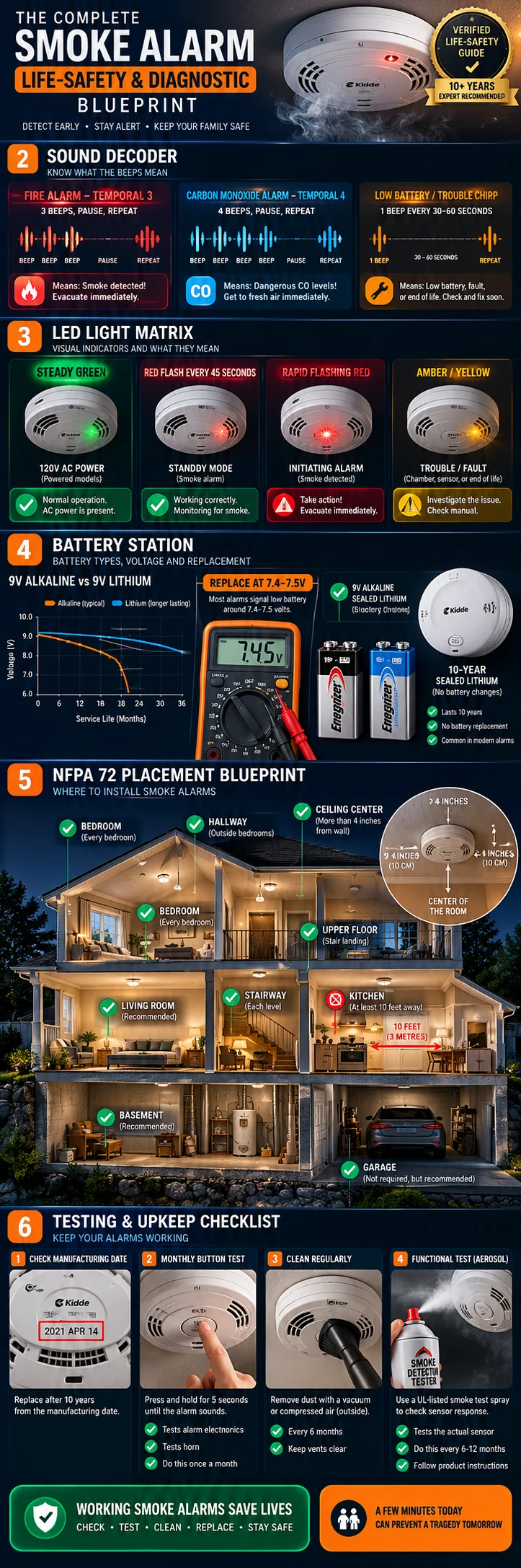
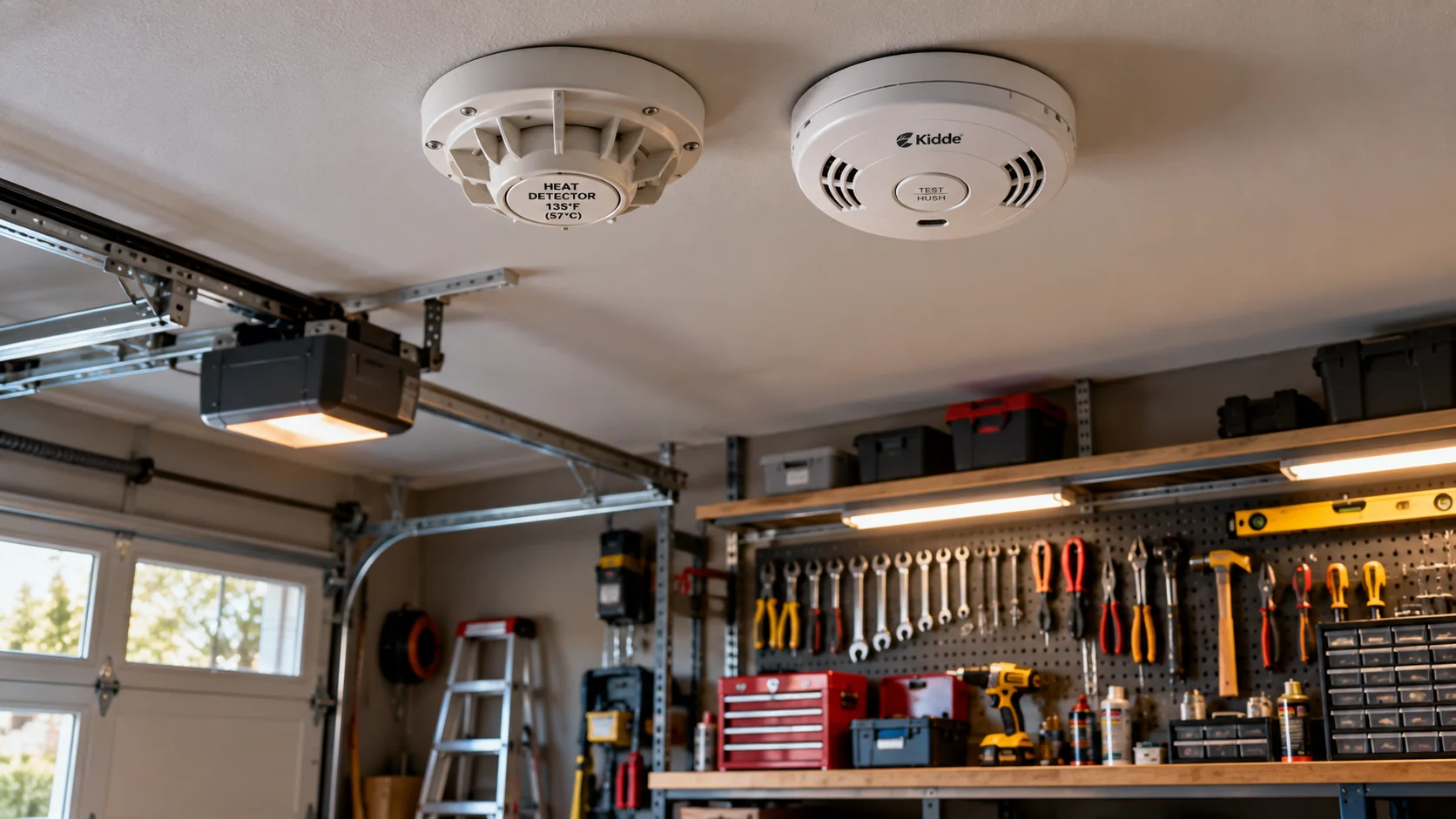
Smoke alarms and heat detectors perform complementary roles in complete residential fire protection layouts.
Technical Comparison
| Feature | Smoke Alarm (Optical/Photoelectric) | Heat Detector (Thermal) |
|---|---|---|
| Detection Trigger | Airborne smoke particles and combustion aerosols | Fixed high temperature (135°F+) or rapid temperature rise (15°F/min) |
| Primary Purpose | Human life safety and early sleeping evacuation | Property protection in harsh environments |
| Ideal Locations | Bedrooms, hallways, living rooms, basements | Garages, unfinished attics, kitchens, boiler rooms |
| False Alarm Resistance | Prone to false alarms in dusty/steamy areas | 100% immune to dust, exhaust fumes, and steam |
Rate-of-Rise vs Fixed-Temperature Heat Detectors: Engineering Mechanisms
Heat alarms employ two distinct physical detection mechanisms to sense thermal energy:
- Fixed-Temperature Sensors: Mechanical fixed units feature a factory-calibrated eutectic alloy disc that melts at an exact thermal setpoint, typically 135 deg F (57 deg C) for living areas or 194 deg F to 200 deg F (90 deg C to 93 deg C) for unconditioned attics. Modern electronic models use negative temperature coefficient (NTC) thermistors that reset automatically once temperatures normalize.
- Rate-of-Rise (RoR) Sensors: These detectors feature a sealed pneumatic chamber with a calibrated atmospheric bleed vent and a flexible metal diaphragm. When ambient temperature rises gradually from daytime heating, air bleeds harmlessly through the vent. When a flash fire causes temperatures to climb faster than 15 deg F (8.3 deg C) per minute, internal pressure expands the diaphragm and forces electrical contacts closed to trigger the alarm.
- Combination Fixed + Rate-of-Rise: Leading residential units (such as the Kidde HD135F) incorporate dual triggers: they activate if temperatures spike suddenly (rate-of-rise) or if ambient heat steadily reaches 135 deg F.
Why Heat Detectors Cannot Replace Smoke Alarms in Bedrooms: NFPA 72 Rules
A dangerous misconception is that heat detectors can replace smoke alarms in sleeping areas to eliminate false alarms. Under NFPA 72 Section 29.3.1 and International Residential Code (IRC) Section R314, heat alarms are strictly prohibited as primary sleeping area detectors:
| Hazard Factor | Smoke Detector Performance | Heat Detector Performance |
|---|---|---|
| Response Time in Smoldering Fires | Triggers in 3 to 15 minutes during early particulate release | May take 30 to 60+ minutes until open flames generate massive heat |
| Toxic Gas Warning (CO & Cyanide) | Alerts occupants hours before lethal gas concentrations build | Zero response to toxic combustion gases; occupants can asphyxiate |
| Statutory Building Code Status | Mandatory inside every bedroom and corridor under IRC R314 | Supplementary only; property protection for harsh spaces |
Garage & Attic Thermal Protection: Preventing Vehicle Exhaust False Trips
Attached garages represent the single most common residential fire origin zone involving vehicles, fuel storage, and charging equipment. Yet placing a smoke alarm inside a garage is a code error:
- Vehicle Exhaust Particle Fouling: Starting an internal combustion automobile or diesel truck produces concentrated soot particles and unburned hydrocarbons. These aerosols immediately enter optical darkrooms, causing instant false alarms.
- Seasonal Attic Temperature Extremes: Unconditioned attics frequently exceed 120 deg F in summer and drop below freezing in winter, pushing smoke detector electronic components outside their UL-tested operating parameters (32 deg F to 100 deg F).
- Recommended Setup: Install an interconnected 135 deg F or 194 deg F heat detector (such as the First Alert HD6135FB) in the garage and attic. Wire its traveler line directly to the interior 120V smoke alarm network so that any thermal trigger in the garage immediately awakens occupants in every bedroom.