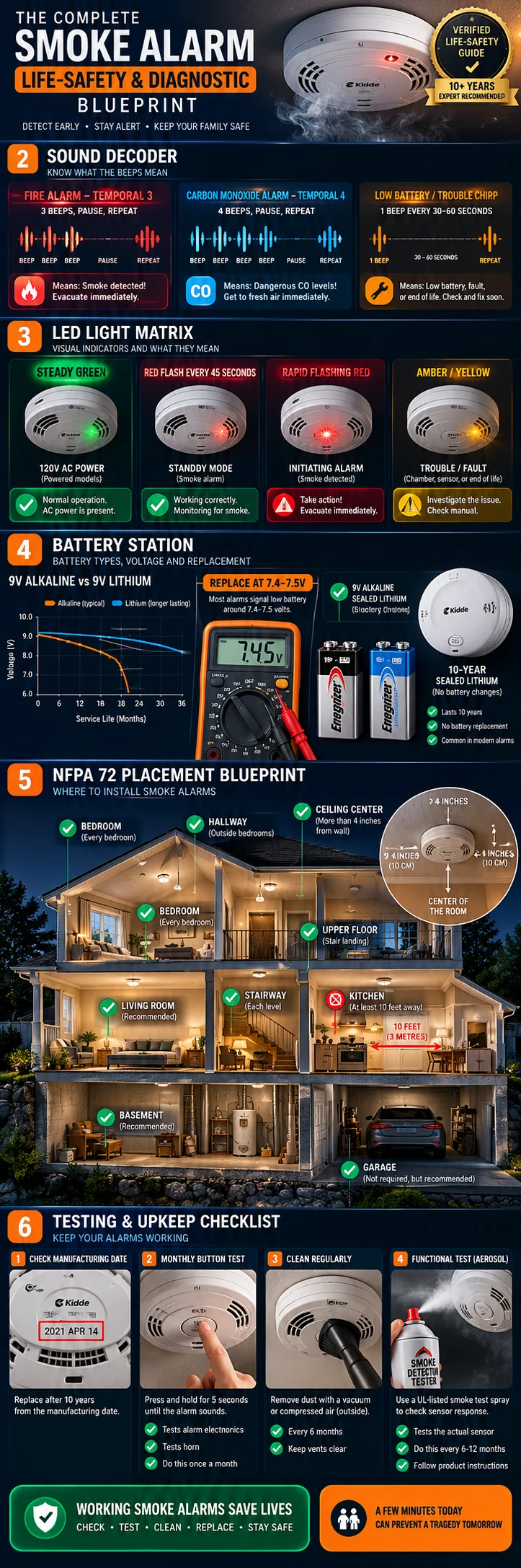
Nuisance smoke alarm false alarms create severe life-safety hazards because repeated false triggers prompt homeowners to disconnect power, leaving residences unprotected against fatal fires. Under modern NFPA 72 and UL 217 9th Edition standards, false alarms are preventable through proper sensor technology selection, spatial positioning buffers, and routine chamber maintenance.
Kitchen Proximity and Nuisance Prevention Standards
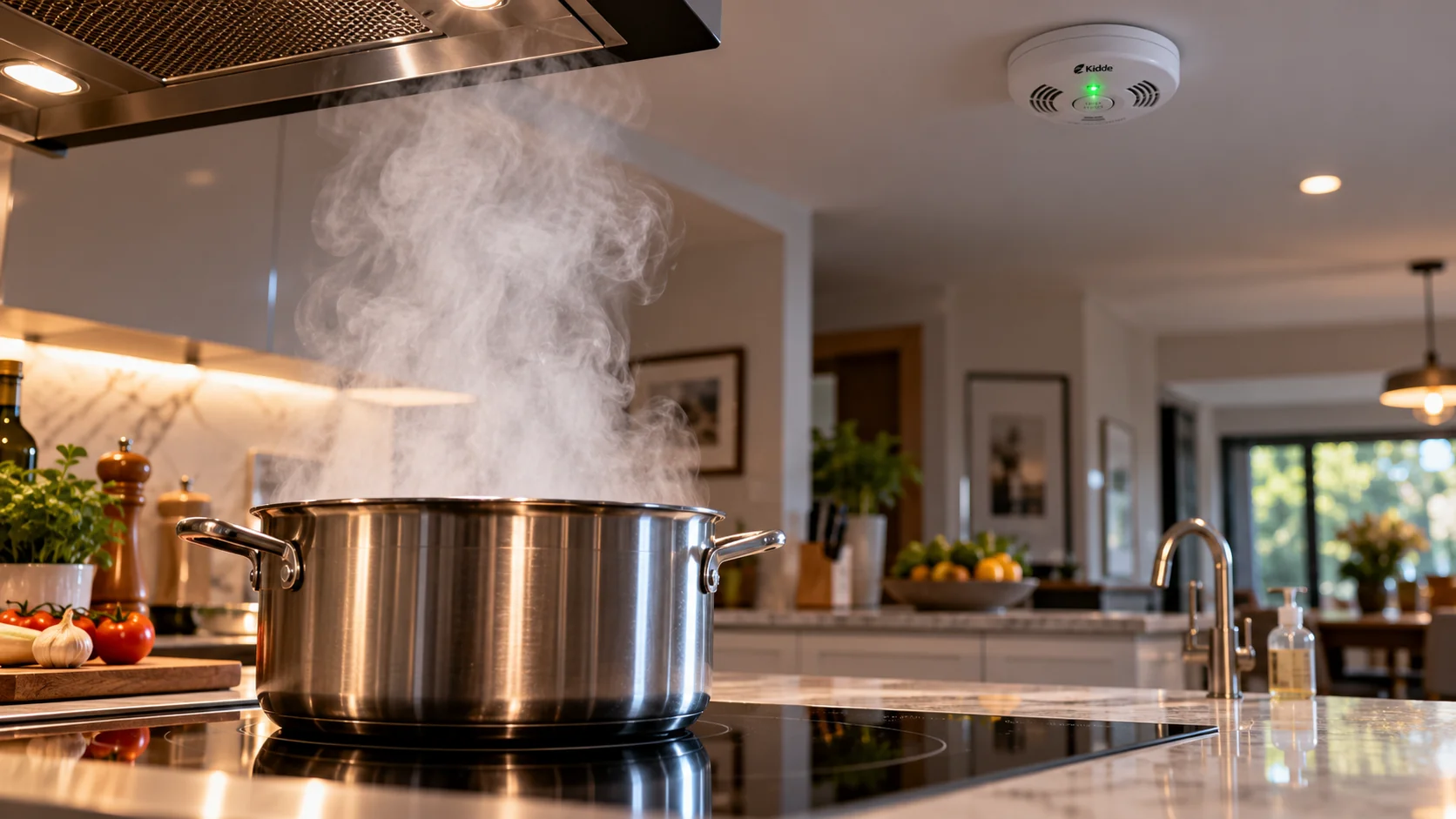
Cooking aerosol is the single largest contributor to residential nuisance alarms. Cooking fires produce high concentrations of invisible sub-micron aerosols and water vapor that readily trip legacy ionization detectors.
| Separation Distance from Cooking Appliance | NFPA 72 (2022 Edition) § 29.8.3.4 Criteria | Permitted Technology & Mandatory Features |
|---|---|---|
| Less than 6 Feet (0 to 1.8 meters) | Prohibited under § 29.8.3.4(5) | Smoke alarms prohibited due to chronic false triggers (listed heat alarms permitted for property protection) |
| 6 Feet to 10 Feet (1.8 to 3.0 meters) | Permitted under § 29.8.3.4(4) Exception | Allowed only if room geometry prevents 10-foot separation; alarm must be listed for cooking nuisance resistance (UL 217 8th/9th Edition) |
| 10 Feet to 20 Feet (3.0 to 6.0 meters) | Standard Separation under § 29.8.3.4(4) | Photoelectric alarms or alarms equipped with an operational alarm-silencing hush feature |
| Greater than 20 Feet (6.0+ meters) | Full Clearance Baseline | Standard listed residential smoke alarm technology permitted (photoelectric, dual-sensor, or ionization) |
If your living layout places a smoke alarm within 20 feet of a stove, oven, or cooktop, replace legacy ionization models with a modern photoelectric smoke alarm listed to UL 217 8th or 9th Edition cooking nuisance resistance standards. Always confirm specific requirements with your municipal fire prevention bureau or local Authority Having Jurisdiction (AHJ), as adopted code editions and local amendments vary by city.
Bathroom Steam and High Relative Humidity
Steam generated from hot showers consists of suspended water droplets measuring 5 to 10 microns in diameter. These droplets mimic the optical properties of smoldering smoke when they drift into an optical darkroom.
NFPA 72 Section 29.8.3.4 mandates that smoke alarms must sit a minimum horizontal distance of 36 inches (3 feet) from the doorway of a bathroom containing a shower or tub. In corridors with low ceilings or poor airflow, maintaining a 6-to-10 foot buffer distance prevents condensing vapor from settling on optical sensing diodes. Always install and run an exhaust fan rated for the bathroom square footage during and for 15 minutes following hot showers.
The Physics of 3:00 AM False Alarms
A perplexing issue for homeowners is an alarm sounding a full emergency horn in the middle of the night with no cooking, smoke, or fire present. This occurrence is driven by the diurnal temperature drop and humidity swell:
- HVAC Setback Temperature Drop: When central heating is lowered at night, indoor air temperature drops by 5 to 10 degrees Fahrenheit between 2:00 AM and 5:00 AM.
- Alkaline Battery Internal Resistance: In cooler temperatures, electrochemical ion mobility inside 9V alkaline backup batteries slows down, temporarily lowering terminal voltage under load.
- Chamber Dust Particulate Swelling: Cool air holds less moisture, causing relative humidity in bedrooms and hallways to rise significantly. Microscopic dust particles and drywall gypsum that have collected inside the optical sensing maze absorb this airborne moisture, swelling in physical volume. Once the swollen particles deflect more than 1.5% to 2.5% of the infrared beam into the photosensor, the microprocessor commands a full emergency alarm.
Seasonal Heating Startup Pyrolysis
During the initial startup of a central heating system, furnace, heat pump auxiliary heat strips, or electric baseboard heaters in autumn, accumulated dust and lint on heating coils undergo pyrolysis.
This thermal decomposition creates ultrafine combustion particulates (measuring 0.01 to 0.1 microns). While harmless to humans and completely invisible, these particulates ascend to the ceiling via thermal updrafts, instantly tripping ionization smoke alarms. Opening windows and running the furnace for 30 minutes during a planned afternoon burns off this dust layer safely without middle-of-the-night emergency panics.
Hardwired Interconnect Line Voltage Surges
In hardwired installations, interconnected alarms share a dedicated 9-volt DC signal traveler (the red or orange wire). When an unshielded traveler wire runs alongside high-draw AC circuits inside wall studs, large inductive loads (refrigerators, deep freezers, HVAC compressors, or power tools) can induce transient inductive voltage spikes.
If a neutral conductor wire nut inside an electrical junction box is loose or oxidized, this voltage spike exceeds the 4.5V threshold required to trip the interconnect circuit, causing an instantaneous 2-to-5 second false alarm across every connected unit. Ensuring tightly twisted wire nuts and stable electrical grounds eliminates transient electrical false alarms.
Routine Cleaning Protocol to Eliminate Chamber Faults
To keep alarms within factory optical tolerances and prevent false alarms:
- Vacuum perimeter intake grilles every 6 months using a soft horsehair brush attachment.
- Blow clean, moisture-free compressed gas across the optical maze at a 45-degree angle.
- Never spray air fresheners, disinfectant sprays, paint, or bug repellents near smoke alarms, as solvent propellants permanently coat optical lenses.
- Replace any smoke alarm that has reached 10 years of service from its manufacture date.