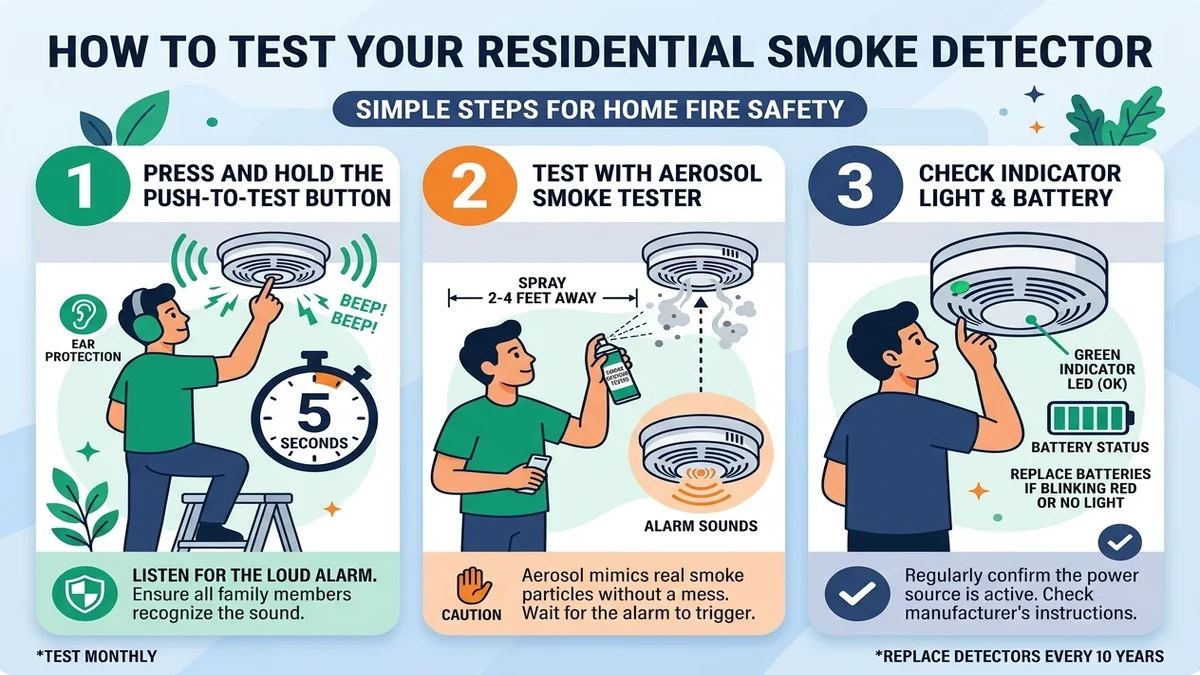
How to Test a Smoke Detector with the Test Button
Push-button testing is the standard homeowner check recommended by fire-safety agencies. It requires no special equipment and verifies that the alarm sounding mechanism and electronic test function respond.
To test with the button:
- Stand safely near the alarm. If the unit is mounted on a high ceiling, use a stable stepladder or follow the manufacturer guidance for reaching the button.
- Press and hold the Test button for the period specified by the manufacturer. Holding duration varies across model lines: some alarms respond within 1 second, while others require holding for several seconds to complete their diagnostic cycle.
- Listen for the alarm sound. Confirm that the signal is loud and clear.
- Release the button. The alarm should silence after releasing pressure, though some models continue their test cycle for a few seconds before resetting.
How to Test Interconnected Smoke Detectors
Interconnected alarms link multiple units so that when one detector activates, compatible alarms throughout the dwelling sound simultaneously.
To test an interconnected system:
- Work with a helper: While one person initiates the test on an alarm, a second person confirms that remote alarms in other rooms or on other floors sound as specified.
- Rotate the initiating unit: Initiate subsequent tests from different alarm locations to verify that communication functions across the entire network.
- Identify silent units: If one alarm fails to respond while others sound, consult the manufacturer manual to troubleshoot hardwired interconnect wiring or wireless radio-frequency (RF) enrollment.
For detailed whole-house testing procedures, see our dedicated guide on how to test interconnected smoke alarms.
How to Test a Smoke Detector with Aerosol (Simulated Smoke)
Some manufacturers and professional fire-alarm maintenance procedures use approved simulated-smoke products to check smoke-entry and sensing response. Whether this type of test is appropriate, and how often it should be performed, depends on the alarm, applicable manufacturer instructions, and the system maintenance requirements.
When aerosol testing is specified:
- Use approved testing canisters: Use certified aerosol test sprays designed specifically for smoke alarms that leave no oily residue on sensor optics.
- Follow manufacturer spray guidelines: Direct the spray toward the sensor vents from the recommended distance for the duration indicated in the product manual. Avoid spraying directly at close range.
- Never use real combustion smoke: Do not test smoke alarms with burning paper, blown-out matches, candles, or incense. Real combustion soot deposits heavy carbon residue onto sensing optics, which can damage the unit or trigger false alarms.
Learn more about testing canisters and dispenser poles in our guide to smoke detector testers and aerosol equipment.
How to Test a Smoke Detector Battery
A smoke detector battery must supply reliable voltage for standby monitoring and sufficient current to sound the alarm horn. There are two standard ways to check battery condition:
- Under-load button check: When you press the Test button, the unit draws active current to power the horn. A weak or dying battery will produce a faint sound, an intermittent chirp, or fail to sound entirely.
- Battery verification: For battery-operated or battery-backup alarms, verify the battery expiration date and ensure terminals are clean and securely connected. If the alarm chirps or sounds faintly during the test button check, install a fresh battery recommended by the manufacturer.
For battery chemistry comparisons and replacement procedures, see our guides on smoke alarm batteries and 9V smoke alarm battery testing.
What to Do if a Smoke Detector Fails the Test
If an alarm does not sound when you press the Test button:
- Check the battery: For replaceable battery models, ensure the battery is seated firmly with correct terminal polarity (+ and -). If in doubt, install a fresh alkaline battery.
- Check power connections: On hardwired units, verify that the wiring harness is plugged in securely and check the main circuit breaker.
- Clean exterior vents: Dust or cobwebs around the housing can interfere with operation. Gently vacuum the exterior vents with a soft brush attachment.
- Check the manufacture date: Look at the date stamped on the back of the alarm. If the unit has reached the manufacturer replacement age (typically 10 years), replace the entire alarm.
- Replace defective alarms: If the unit remains silent after checking power and following manufacturer troubleshooting, replace the alarm immediately.
Brand-Specific Testing Notes (Kidde & First Alert)
Always follow the manual for your exact model. General testing characteristics for leading brands include:
- Kidde Smoke Alarms: Kidde instructions vary by model line. Some Kidde support documents specify holding the Test button for a minimum of 5 seconds, while other models respond sooner. On Kidde combination smoke and carbon monoxide alarms, the test sequence typically cycles through distinct fire and CO audible signals and voice announcements. See our Kidde smoke alarm guide.
- First Alert & BRK Alarms: First Alert models feature integrated Test/Silence buttons. On hardwired series and combination models, holding the button initiates the horn cycle and diagnostic LED flash. Voice-equipped models will announce programmed location information during the test. See our First Alert smoke alarm guide.
How Often Should You Test Smoke Detectors?
Many fire-safety authorities recommend testing smoke alarms monthly using the test button; some manufacturers recommend weekly testing. Follow the instructions for your specific alarm when they differ.
- Monthly (or Weekly where specified): Test every smoke alarm using its Test button.
- Every 6 Months: Clean dust and debris from around the alarm housing.
- Annually: Replace replaceable batteries (or when low-battery chirps indicate depletion).
- Every 10 Years: Replace the complete smoke alarm unit.
For full schedule details, review our breakdown on how often to test smoke alarms.