A comprehensive fire alarm inspection checklist provides building owners, residential landlords, facility maintenance engineers, and home inspectors with a standardized framework to verify life-safety readiness under NFPA 72 Table 14.4.3.2. Routine visual audits, physical functional testing, and documented record-keeping ensure code compliance and protect building occupants during emergency events.
The NFPA 72 Periodic Inspection Checklist
| Inspection Frequency | System Component | Standard Inspection Procedure | Acceptable Pass Criteria |
|---|---|---|---|
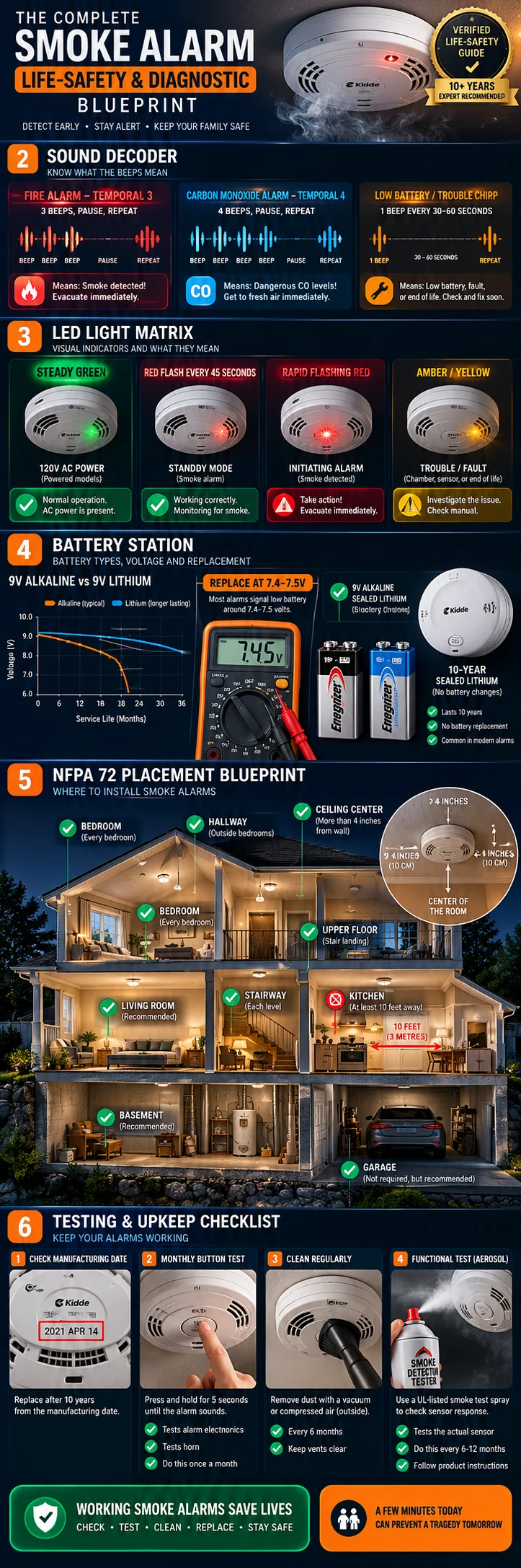
| Monthly | Primary & Secondary Power | Verify green AC power LED is illuminated on all alarm heads | Line power healthy; circuit breaker fully engaged |
| Monthly | Horn Sounder & Strobe Flash | Execute manual push-button test on each device | Immediate 85 dBA Temporal 3 horn; strobe flashes at 1 Hz |
| Semi-Annually | Physical Sensor Enclosure | Inspect 360-degree intake slots for dust, insects, and paint | Intake vents completely clear of obstruction and debris |
| Annually | Functional Smoke Sensing | Apply UL-listed synthetic aerosol smoke to each sensor head | Detector detects smoke and triggers alarm within 15 seconds |
| Annually | Emergency Backup Batteries | Inspect battery terminals; measure open-circuit DC voltage | Terminal tension verified; replace non-sealed cells annually |
| Every 10 Years | Complete Device Lifecycle | Verify rear casing manufacturing date stamp on each alarm | All units under 10 years of age; replace expired units |
Essential Physical Audit Checkpoints
- Dead-Air Clearance Verification: Verify that ceiling-mounted smoke alarms sit at least 4 inches (100 mm) away from side walls, and wall-mounted units sit between 4 and 12 inches down from the ceiling line.
- HVAC & Ceiling Fan Separation: Confirm alarms sit at least 36 inches (3 feet) horizontally away from forced-air supply diffusers and ceiling fan blade tips.
- Cooking Proximity Verification: Confirm no smoke alarms are installed within 10 feet of fixed cooking appliances, and units between 10 and 20 feet are photoelectric models with hush buttons.
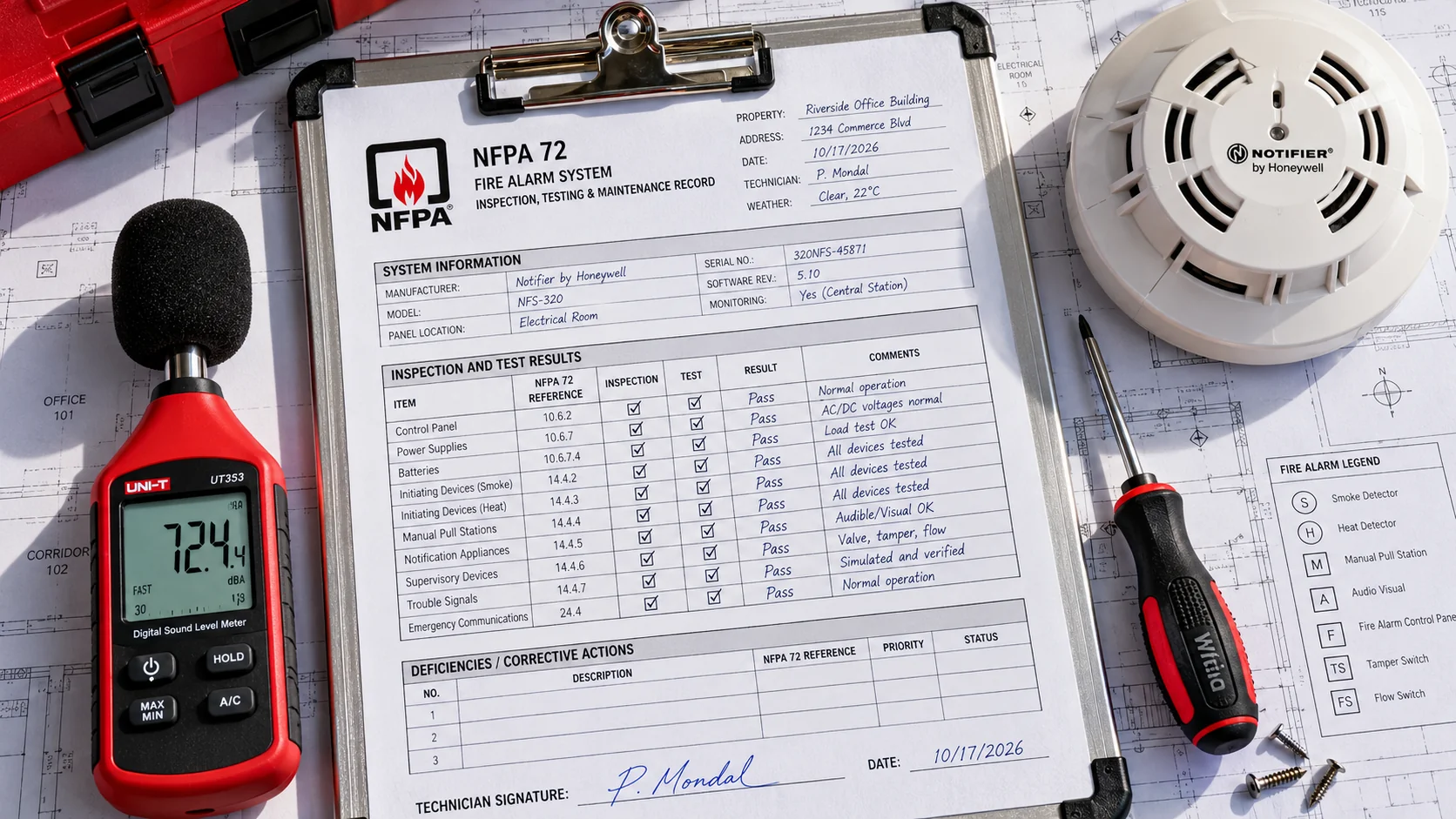
- Decibel Volume Testing: Using a calibrated sound level meter, verify horn sound pressure levels reach at least 75 dBA at pillow level in all bedrooms with interior doors closed.
- Interconnect Signaling Verification: Confirm that triggering any single detector commands every interconnected unit throughout the building to sound simultaneously within 3 seconds.
Annual Record Retention & AHJ Documentation Mandates
Under NFPA 72 Section 14.6.2.4, building owners and facility operators must retain complete inspection, testing, and maintenance (ITM) documentation for the service life of the fire alarm system, with minimum 5-year on-site availability for review by the Authority Having Jurisdiction (AHJ).
Documentation must record the exact date and time of testing, the physical location of each initiating device, the name of the certified testing technician, the serial number or model number of the detector, and any corrective actions taken to resolve deficiencies. Maintaining accurate inspection forms protects property owners against municipal fire code fines and validates insurance coverage following any structural fire incident.