Carbon monoxide has a molar mass of 28.01 g/mol, which is virtually identical to ambient air (28.97 g/mol). Consequently, CO gas diffuses evenly throughout the entire room volume without stratifying at the floor or ceiling.
Fuel-Burning Appliance Clearances
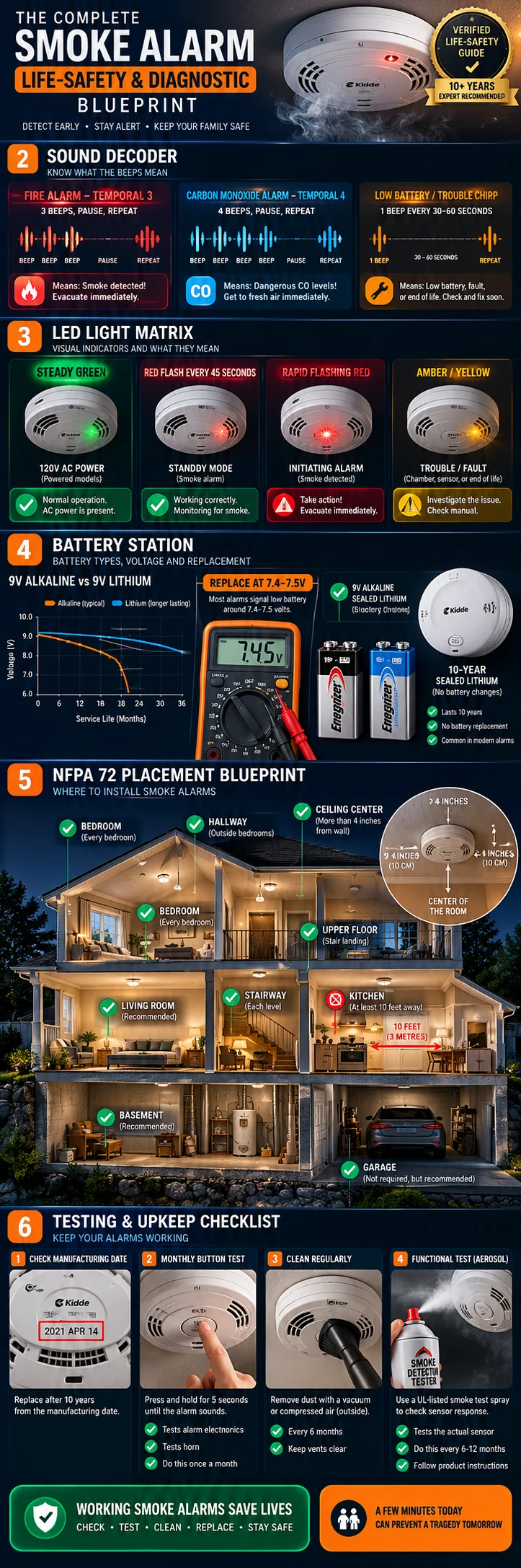
Keep CO alarms at least 15 feet from fuel-burning appliances (furnace, boiler, water heater, fireplace, etc.), or follow the manufacturer's installation instructions. Avoid placing alarms in dead-air spaces, directly above appliances, or in the path of strong air currents from supply vents.
Room-by-Room Placement Guidelines
| Home Location | Requirement Level | Recommended Placement |
|---|---|---|
| Sleeping Hallways | Mandatory | Centrally placed within 10 to 15 ft of all bedroom doors |
| Inside Bedrooms | Recommended | Particularly important if bedrooms contain fuel heaters or fireplaces |
| Furnace / Boiler Rooms | Mandatory | Place at least 15 feet away from fuel-burning heating appliances |
| Attached Garage Entry | Mandatory | Inside the home near the garage connecting doorway |
| Every Finished Floor | Mandatory | At least one detector per habitable level |
Where to Put Carbon Monoxide Detectors: Mounting Height on Wall vs Ceiling
A persistent homeowner myth is that carbon monoxide sinks to the floor or rises straight to the ceiling like hot smoke. The physics of gas density dispels this misunderstanding:
- Molar Mass Physics: Carbon monoxide has a molar mass of 28.01 grams per mole, while ambient air averages 28.97 grams per mole. Because their densities are practically identical, CO gas does not stratify in layers; it diffuses uniformly throughout room air via natural thermal currents and HVAC air movement.
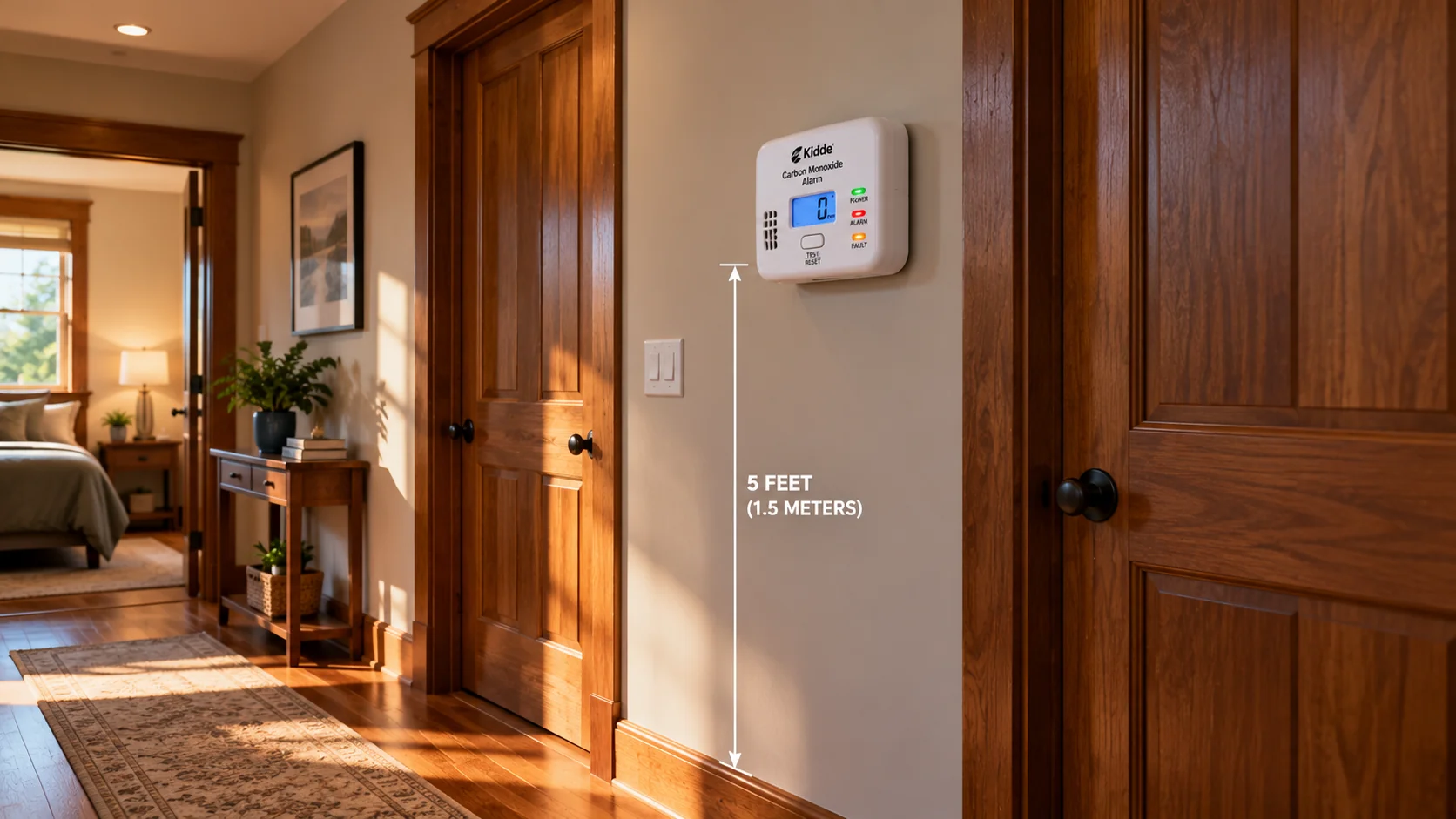
- Eye-Level Wall Placement (Recommended): Mounting a CO detector on an interior wall approximately 5 feet (1.5 meters) above the finished floor places the digital PPM concentration display at eye level. This allows homeowners to verify background ambient levels easily and press the monthly test button without climbing a ladder.
- Ceiling Mounting Guidelines: If mounting on the ceiling, place the unit at least 4 inches (10 cm) away from any side wall to avoid stagnant dead-air pockets where wall and ceiling planes meet.
- Plug-In Lower Wall Units: Plug-in AC models installed into baseboard outlets 1 to 2 feet above the floor operate safely, provided furniture, heavy drapes, or electrical appliances do not obstruct air circulation around the sensor vents.
Where to Place Carbon Monoxide Detectors in Multi-Story Homes & Bedrooms
Under NFPA 72 Section 29.5.1 and International Residential Code (IRC) Section R315, residential layouts must adhere to strict spatial proximity rules:
| Dwelling Location | Placement Standard | Life Safety Objective |
|---|---|---|
| Hallways Outside Bedrooms | Within 10 to 15 feet of all bedroom doors | Guarantees 85 dB audible Temporal-4 horn awakens sleeping occupants through closed doors. |
| Inside Individual Bedrooms | Mandatory if bedroom contains fuel appliance | Required if bedroom features a gas fireplace, kerosene space heater, or attached furnace closet. |
| Every Habitable Story | Minimum 1 detector per floor level | Ensures early detection on floors with fuel appliances, including finished attics and basements. |
| Attached Garage Access | Inside living area within 10 feet of access door | Detects idling vehicle exhaust seepage before combustion gases migrate into upper living areas. |
Where to Install CO2 Detectors? Carbon Monoxide vs Carbon Dioxide Confusion
Homeowners regularly ask where to install a "CO2 detector". Understanding the critical distinction between Carbon Monoxide (CO) and Carbon Dioxide (CO2) prevents life-safety hazards:
- Carbon Monoxide (CO) Alarms: Mandatory residential life-safety devices. Carbon monoxide is a lethal, invisible, and odorless poison gas produced by incomplete combustion in furnaces, water heaters, and vehicle engines. You must install CO alarms on every floor and outside all sleeping areas.
- Carbon Dioxide (CO2) Monitors: Indoor air quality (IAQ) sensors used primarily in commercial office buildings, school classrooms, and greenhouses to monitor ventilation. Carbon dioxide is the natural byproduct of human exhalation. Residential building codes do not require CO2 alarms, and CO2 monitors will never sound an alarm for toxic combustion gas leaks.
- Check Your Device Label: If your alarm is chirping or sounding an alert, check the casing label. Life-safety units will explicitly state "Carbon Monoxide Alarm" or "CO Detector", certified to standard UL 2034.
Dead-Air Spaces & Locations Where You Must Never Mount a CO Alarm
Improper positioning can blind sensor cells or trigger constant false warnings:
- Within 15 Feet of Heating Appliances: Do not mount directly beside gas furnaces, water heaters, or wood stoves. Incomplete fuel combustion during initial burner ignition produces brief trace amounts of CO that will trigger nuisance alarms.
- Direct Forced-Air Streams: Avoid mounting within 3 feet of HVAC supply registers, return air grilles, or ceiling fan paths. High air velocities dilute ambient air around the sensor, preventing accurate PPM readings.
- Excessive Moisture & Bathrooms: Keep detectors at least 10 feet away from high-humidity areas like showers or laundry rooms. High condensation coats the porous electrochemical Teflon membrane and degrades platinum catalyst efficiency.
- Extreme Temperature Environments: Never install standard residential CO alarms inside unconditioned attics or detached garages where temperatures drop below 32 deg F (0 deg C) or rise above 100 deg F (38 deg C). Liquid electrolyte solutions freeze or evaporate outside tested ranges.