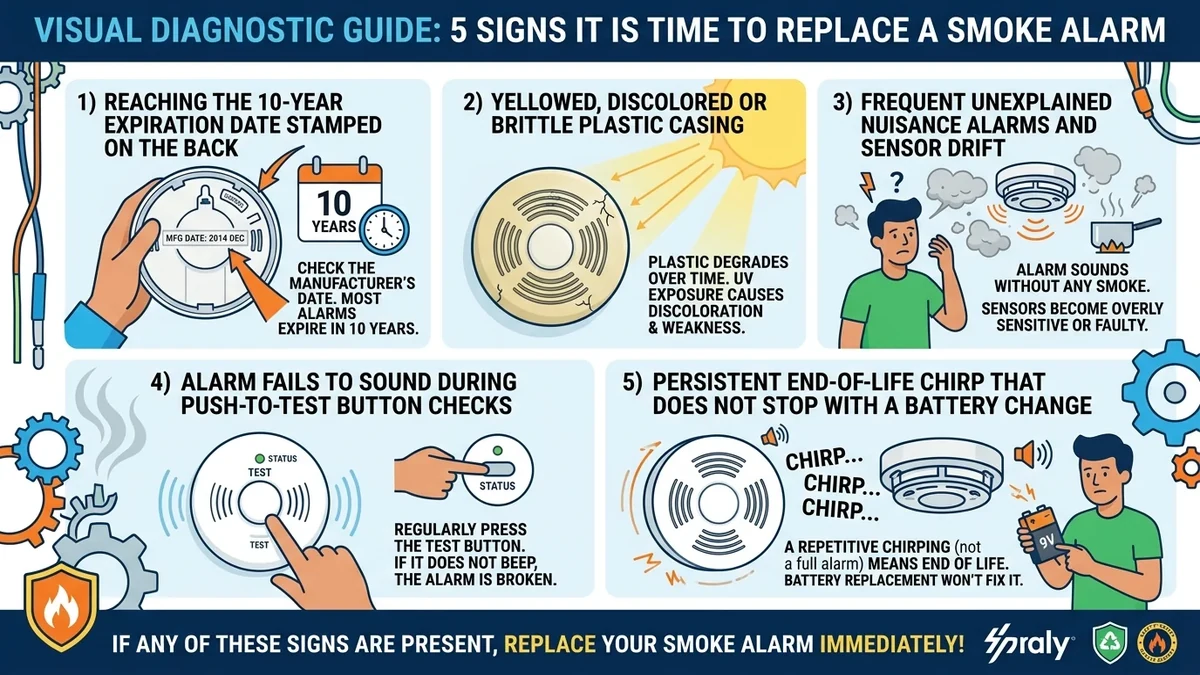
Smoke alarms are precision life-safety instruments with an engineered operational lifespan of 10 years. Recognizing when an alarm has reached the end of its reliable service life ensures home safety.
The 5 Critical Replacement Warning Signs
- The 10-Year Manufacture Rule: Fire safety standards (NFPA 72) mandate replacing all smoke alarms every 10 years. Optical diodes (in photoelectric models) and radioactive sources (in ionization models) degrade over time from ambient humidity and dust.
- Push-Button Test Failure: If the alarm fails to sound an the manufacturer-specified alarm/test signal siren after installing fresh, tested batteries and cleaning terminals, internal circuitry has failed.
- Incessant End-of-Life Warning Chirp: Modern alarms have internal microcontrollers programmed to sound permanent trouble chirps once 10 years of operation have elapsed.
- Severe Plastic Yellowing: Smoke alarm casings are molded from ABS plastic containing brominated flame retardants. When exposed to room heat and UV light over a decade, bromine compounds oxidize, turning the casing yellow-a visual indicator of aging internal components.
- Drywall Dust or Paint Contamination: Home renovation dust coats optical lenses and blocks intake grilles, causing permanent blindness or non-stop false alarms.