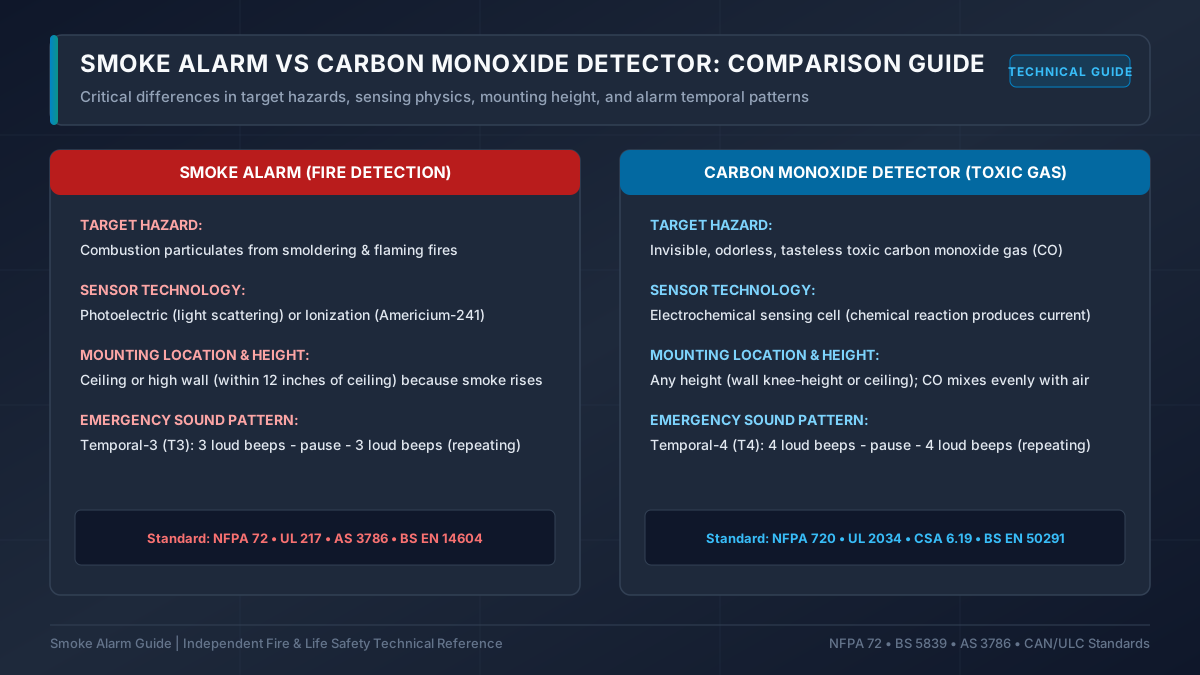
Smoke alarms detect airborne physical particles produced by fire and sound a Temporal 3 horn pattern. Carbon monoxide (CO) detectors use electrochemical sensors to detect colorless, odorless toxic gas from incomplete fuel combustion, sounding a Temporal 4 horn pattern. Both devices are essential for home safety.
Detection Physics & Combustion Response Profile
Comparing Life Safety Devices:
• Smoke Alarm: Senses smoke/fire → Temporal 3 alarm (3 rapid beeps, pause, 3 beeps) → 10-year lifespan → Ceilings/high walls.
• CO Detector: Senses toxic gas → Temporal 4 alarm (4 rapid beeps, pause, 4 beeps) → 5-10 year lifespan → Any wall/ceiling height.
• Combination Unit: Senses both threats in a single integrated casing.
Smoke alarms and carbon monoxide detectors protect against entirely different household threats. Understanding how they operate ensures complete home coverage.
Key Technical Differences
| Feature |
Smoke Alarm |
Carbon Monoxide (CO) Detector |
| Target Threat |
Combustion smoke particles and open flames |
Colorless, odorless, toxic carbon monoxide gas (CO) |
| Sensing Principle |
Photoelectric light scattering or ionization |
Electrochemical platinum catalyst fuel cell |
| Emergency Audible Cadence |
Temporal 3 (3 loud pulses, 1.5s pause) |
Temporal 4 (4 rapid pulses, 5s pause) |
| Mounting Location |
Ceiling or upper wall (smoke rises) |
Ceiling, wall, or knee-height (CO mixes evenly with air) |
| Sensor Service Life |
10 years |
5 to 10 years (model-specific) |
Important Safety Guideline
A smoke alarm will NOT detect carbon monoxide. If your home has gas appliances, an attached garage, or a fireplace, install dedicated or combination CO detectors.