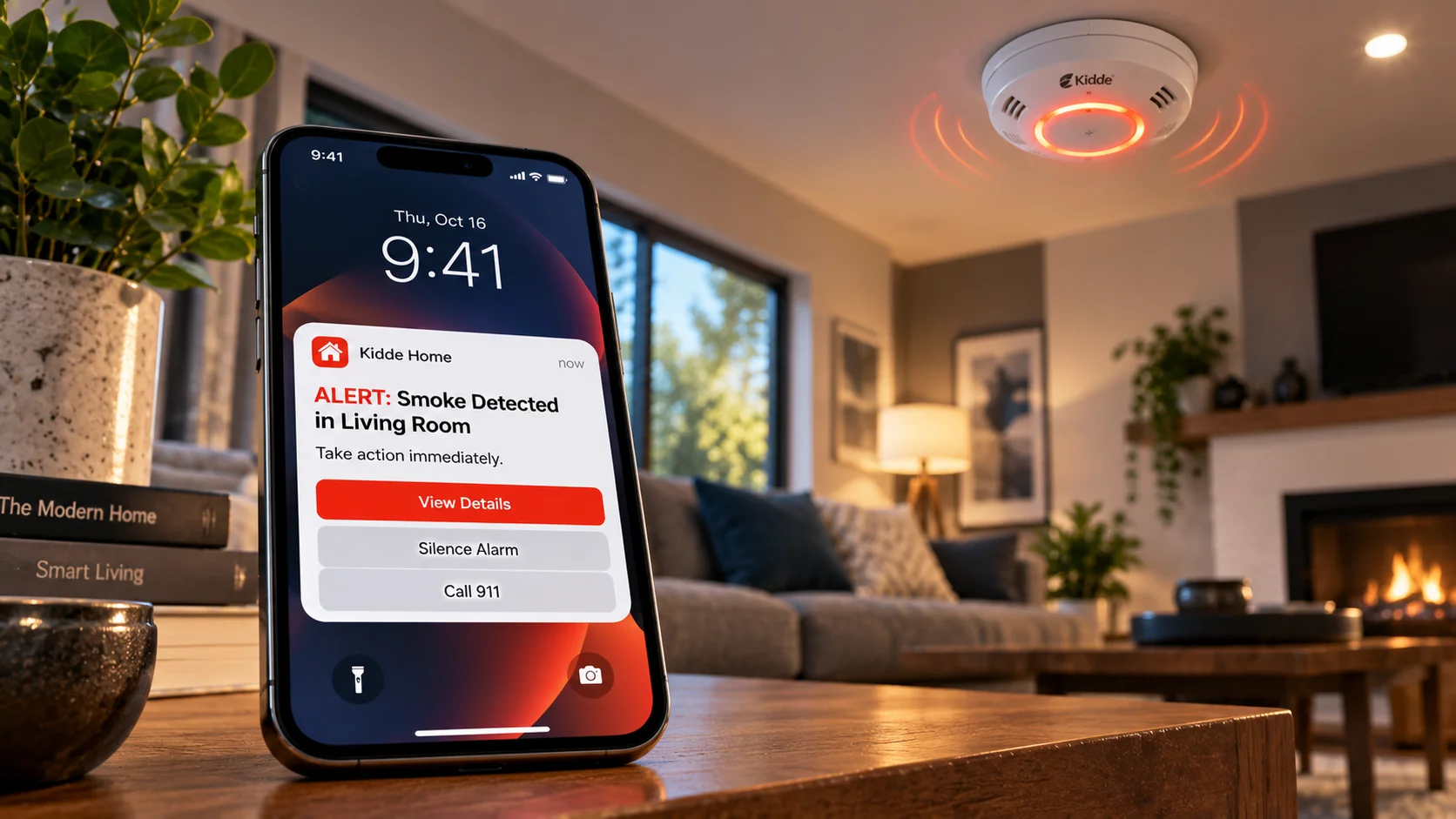
Smart smoke alarms connect to home Wi-Fi networks to send instant push alerts to your phone if an emergency occurs while you are away. Premium models provide spoken room announcements and smartphone hush buttons. Ensure your smart alarms have UL 217 certification and maintain independent physical horn sounding even if your internet connection drops.
Detection Physics & Combustion Response Profile
Smart Alarm Features to Look For:
• Mobile Alerts: Sends instant smartphone notifications when away from home.
• Voice Location Alerts: Announces the specific room and threat (e.g. "Smoke in the Kitchen").
• Smart Home Integration: Can turn on lights for escape path and shut down HVAC to prevent smoke spread.
• Self-Testing: Automated daily sensor and battery diagnostics.
Smart Wi-Fi smoke alarms connect residential fire detection directly to homeowner smartphones, voice assistants, and whole-home automation ecosystems. Under UL 217 8th/9th Edition standards, smart alarms provide real-time mobile push notifications, spoken voice location alerts, and interconnected wireless mesh communication.
Smart Smoke Alarm Feature Comparison
| Device Model |
Sensor Architecture |
Smart Connectivity |
Key Differentiating Features |
| Google Nest Protect (2nd Gen) |
Split-Spectrum Optical Sensor + Electrochemical CO |
Wi-Fi (802.11 b/g/n) + 802.15.4 Wireless Mesh (Weave) |
Human voice location alerts, App Silence, Pathlight nightlight |
| First Alert Onelink Safe & Sound |
Photoelectric Smoke + Electrochemical CO |
Wi-Fi + Apple HomeKit + Built-in Alexa Speaker |
Integrated premium speaker, ceiling voice control, mobile alerts |
| Kidde Smart Smoke + CO Alarm |
Multi-Criteria Optical + Electrochemical CO |
Wi-Fi + Kidde App + Amazon Alexa / Google Assistant |
Direct mobile notifications, remote hush, weather hazard alerts |
Core Life-Safety Advantages of Smart Smoke Alarms
- Remote Mobile Alerts When Away: Traditional alarms only alert individuals physically inside the house. If a fire starts while you are at work or traveling, a smart alarm sends an instant high-priority push alert to your smartphone, allowing you to dispatch emergency services before total structure loss occurs.
- Human Voice Location Announcements: Smart alarms announce the exact location and hazard in natural spoken English: "Heads up! There is smoke in the Kitchen." This directs occupants away from the fire origin during nocturnal evacuations.
- Smartphone App Silence Control: When a minor cooking incident occurs, users can silence the alarm directly from the manufacturer smartphone app without climbing ladders or waving towels.
- Interconnected Wireless Mesh Network: Smart alarms communicate with each other over a dedicated 915 MHz or 802.15.4 wireless radio frequency protocol. Even if household Wi-Fi router power drops during an electrical blackout, the alarms remain fully interconnected and sound simultaneously.
Installation & Power Requirements
Smart alarms are available in two configurations:
- Hardwired 120V Models: Connects to existing 120V household wiring harnesses with backup AA alkaline or lithium cells. Recommended for modern homes with existing ceiling junction boxes.
- Battery-Powered Models: Powered by long-life lithium battery packs providing up to 5 years of wireless smart operation. Ideal for retrofitting older homes without opening drywall.
Important Safety Guideline
Even if your Wi-Fi network goes down, smart smoke alarms retain 100% standalone and local interconnect life-safety horn functionality.
Nest Protect vs First Alert Onelink vs Kidde Smart Alarms
The smart smoke alarm market features three major hardware ecosystems, each offering distinct connectivity protocols and smartphone integration:
- Google Nest Protect: Uses a Split-Spectrum optical sensor to detect fast and slow fires, announces spoken voice alerts with exact room locations, integrates an automatic Pathlight nightlight, and self-tests its speaker and sensor automatically once a month.
- First Alert Onelink: Integrates with Apple HomeKit and Amazon Alexa, offers hardwired and battery variants, and supports whole-home wireless interconnect with standard BRK hardwired alarms.
- Kidde Smart Smoke + Carbon Monoxide Alarm: Features Kidde HomeSafe mobile app connectivity, setup via Wi-Fi without a separate bridge, and sends emergency voice notifications to family smartphones during an alert.
What Happens During an Internet or Wi-Fi Network Outage?
A frequent concern among homeowners is whether smart smoke alarms function when home internet or Wi-Fi routers lose power. All certified smart detectors comply with Underwriters Laboratories UL 217 standards, which mandate completely independent local hardware operation. If your internet connection drops, the local optical sensor, internal processor, and 85-decibel piezo horn operate normally on household AC power or internal battery backup. Only remote smartphone push notifications are temporarily delayed until internet service restores.
Battery vs Hardwired Smart Alarms
Smart alarms are available in both hardwired AC and 10-year battery configurations. Choose hardwired versions if your home has existing wiring.
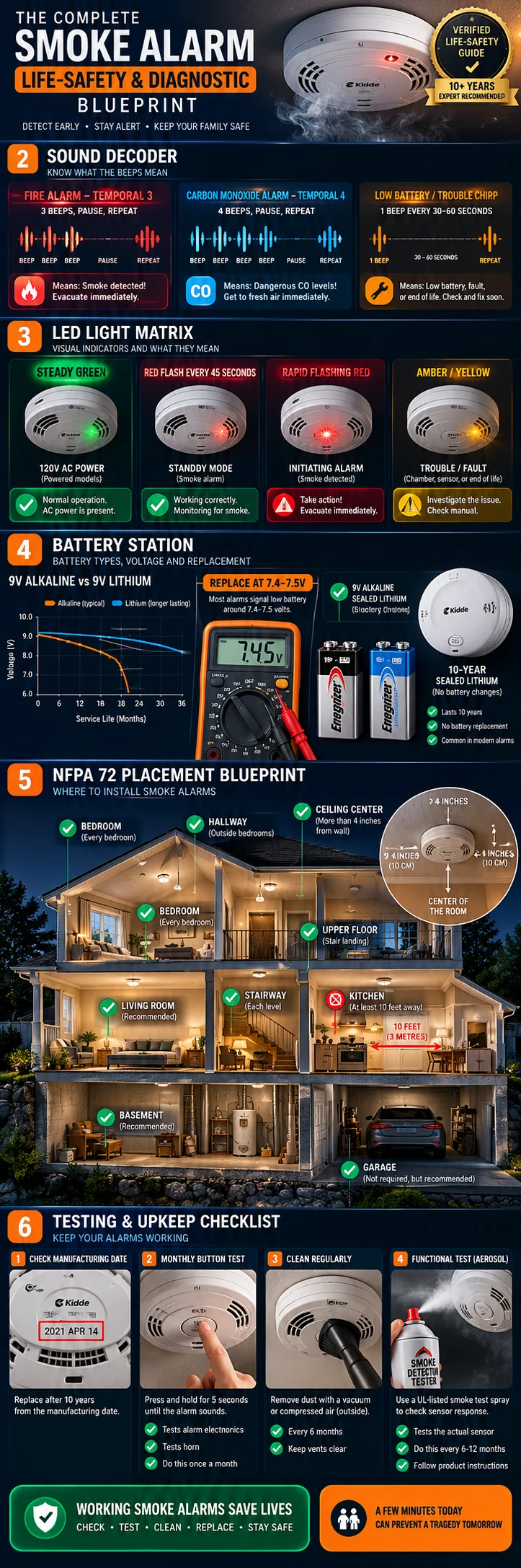
All-in-One Field Reference
Complete Smoke Alarm & Life-Safety Master Infographic
Open Full 8K Image →
Scroll through this complete technical reference to diagnose chirps, decode LED indicator lights, check battery voltages, and verify NFPA 72 whole-home placement rules directly on this page.
Reviewed by Smoke Alarm Guide Editorial Standards Team
Ratio 6:1 Vertical Scroll • NFPA 72 & IRC Compliant